
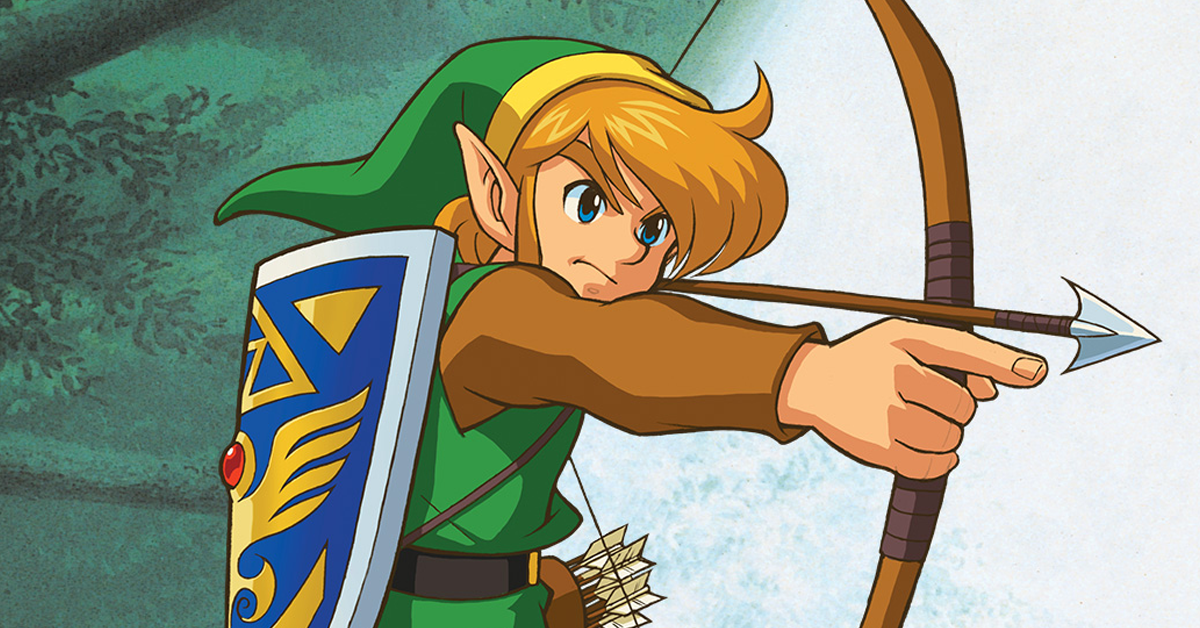
There’s something magical about that sound — rain against the rooftops, thunder echoing across a kingdom asleep. You don’t know what’s coming, but you can feel it. A world on the edge of something greater. A boy about to wake up into destiny.
Even before you press a button, A Link to the Past feels alive. The storm outside, the rumble of thunder, the soft glow of candlelight — it all whispers of an adventure already in motion. You’re not starting a story; you’re stepping into one that’s been waiting for you.
Before Ocarina of Time, before Breath of the Wild, there was this. A 16-bit legend born on the Super Nintendo — the game that didn’t just define what Zelda could be, but what adventure itself could feel like. It’s the moment Zelda became Zelda — not just a series of experiments, but a myth reborn, a formula perfected, and a world that would inspire an entire generation of game designers.
When it released in 1991, A Link to the Past was more than just another sequel. It was Nintendo reclaiming the soul of the original Legend of Zelda — the sense of mystery, danger, and wonder that came from simply wandering. But this time, it was built on a new canvas — a world larger, richer, and more intricate than anything players had seen before.
Gone were the cryptic frustrations of the NES era. In their place: balance. Clarity. Flow. The design of A Link to the Past felt intentional, precise — like every path, secret, and item existed to guide you forward without ever telling you what to do. It was the perfect blend of structure and freedom, teaching you through exploration instead of instruction.
And yet, beyond the gameplay and puzzles, there was something else. A feeling. The sense that you were part of something ancient — a story told through dungeons and melodies, through silence and discovery. It wasn’t loud or cinematic; it was intimate, patient, and deeply human.
This was a game that understood pacing before we had the language for it. It knew when to challenge you, when to let you breathe, when to reward curiosity with a secret passage or a heart piece hidden just out of reach. It turned exploration into emotion.
Every Zelda that followed — from Link’s Awakening to Ocarina of Time, from A Link Between Worlds to Tears of the Kingdom — traces its lineage back here. The dual worlds, the puzzle-based dungeons, the idea that every corner of the map hides a story — it all began in A Link to the Past.
Even now, decades later, it stands as one of the most elegant examples of design in gaming history. There are flashier titles, bigger worlds, more complex mechanics — but few games feel as complete as this one. Every pixel, every note, every secret feels like it belongs exactly where it should be.
More than thirty years on, A Link to the Past remains timeless — not because of nostalgia, but because it captured something that technology can’t replicate: the joy of discovery, the quiet satisfaction of progress, and the thrill of seeing a world unfold before your eyes.
This is the story of how a 16-bit adventure became the foundation of a legend. How it took the simplicity of a fairy tale and built a world that would outlive its creators, its console, and its era.
This is The Legend of Zelda: A Link to the Past — the game that defined not only a franchise, but an entire philosophy of adventure.
The State of Zelda Before 1991
In the late 1980s, The Legend of Zelda was already a phenomenon. The first game, released in 1986, felt like nothing else — an open world before the term even existed. It dropped players into a land full of secrets and dangers, offering no map, no guidance, no explanation — just curiosity and courage. For millions, it was the first time a video game had felt like a world instead of a level.
But then came Zelda II: The Adventure of Link. A bold experiment that tried to push the series in a new direction — side-scrolling combat, experience points, and RPG mechanics. It wasn’t a bad game, but it was divisive. For some, it was too punishing, too strange, too far removed from the spirit of the original. For others, it was fascinating — proof that Nintendo wasn’t afraid to take risks. Still, it left the series at a crossroads.
By the end of the decade, Nintendo had moved into a new era. The Famicom and NES had transformed the company into a global powerhouse, and expectations for what their next console could deliver were enormous. The Super Nintendo wasn’t just more powerful — it was a promise: bigger worlds, better sound, and deeper stories. And for the Zelda team, that meant one thing — it was time to go back.
Shigeru Miyamoto, Takashi Tezuka, and their team wanted to recapture the feeling of the first Zelda — that raw sense of discovery — but bring it to life in a way that only 16-bit technology could allow. The NES had forced them to simplify everything: the world, the story, even the atmosphere. Now, they had color, texture, and sound. They could finally make Hyrule feel alive.
But there was pressure, too. After the divisive response to Zelda II, this next game couldn’t just be good — it had to restore faith in the series. It had to remind players why Zelda mattered in the first place. The mission wasn’t to reinvent the wheel, but to perfect it. To create something that felt both familiar and entirely new.
And beneath all that, there was an unspoken challenge. How do you make a game that feels open and mysterious, but never confusing? How do you create a story that feels epic, but never gets in the way of play? These were questions no one had really answered yet — because no one else was making games quite like Zelda.
The team’s vision was simple but ambitious: take the open-ended adventure of the first game, blend it with the narrative structure of modern storytelling, and make every moment — every screen — feel meaningful. The goal wasn’t just to make a great sequel. It was to build the ultimate version of Zelda — the one they had always imagined, but had never been able to create.
When development began in the late 1980s, few could have imagined how important this project would become. It wasn’t just another title for the Super Nintendo launch window. It was a statement. A declaration that video games could tell legends — not just stories — and that a world made of pixels could still feel like a place you’d lived in.
By the time A Link to the Past was finished, it had evolved far beyond anyone’s expectations. But before we get there — before we talk about its dual worlds, its groundbreaking design, and its quiet emotional power — we have to look at how it was made. Because behind its brilliance lies a development story filled with doubt, determination, and discovery.
Building a Better Hyrule
When work began on A Link to the Past, the Zelda team wasn’t just making another fantasy adventure. They were rebuilding a world — a mythology — from the ground up. What began as a small, ambitious project on the Super Famicom soon became one of the most important creative undertakings in Nintendo’s history.
Shigeru Miyamoto, already a legend for Mario and Donkey Kong, served as producer. Takashi Tezuka, his long-time collaborator, took on the role of director. Between them was a shared vision: to take the raw, unpolished magic of the original Legend of Zelda and craft it into something timeless. Something that felt like a story passed down through generations — even if it was made of pixels and code.
But not everyone on the team was eager to return to Hyrule. According to interviews years later, some developers were hesitant — even frustrated — at being assigned to another Zelda title. The series was already established, and the challenge of reinventing it on new hardware felt daunting. How do you improve on a game that’s already considered a classic? How do you make something familiar feel new again?
The answer came from a philosophy that would define Nintendo’s design ethos for decades: iteration through intuition. The team didn’t start with a grand story or a long list of mechanics — they started with feel. What does it feel like to explore a world without a map? To solve a puzzle that suddenly makes perfect sense? To find something hidden, not because the game told you to, but because you were curious enough to look?
One of the biggest breakthroughs came early in development — the idea of two interconnected worlds: the Light World and the Dark World. At first, it was just a technical experiment, a way to double the map size. But as the team explored the concept, it became the heart of the game’s identity. Two realms, mirrored but changed. Every victory had a shadow, every discovery a reflection. It wasn’t just clever design — it was thematic. It turned the game’s structure into its storytelling.
The SNES hardware made it possible. The team used new tricks like seamless scrolling, detailed tile maps, and layered parallax backgrounds to make Hyrule feel alive. For the first time, they could create forests that felt dense, dungeons that felt oppressive, and storms that felt real. It was still 2D, but it felt three-dimensional — not in space, but in spirit.
Miyamoto famously pushed for accessibility. He wanted A Link to the Past to be a game that anyone could play, but few could master. The goal wasn’t difficulty — it was clarity. If you got stuck, the problem was never the game’s fault. It was yours to solve. Every clue was there, hidden in plain sight. Every secret was a reward for paying attention.
Music and sound played just as vital a role. Composer Koji Kondo crafted themes that became iconic — the triumphant overworld theme, the mysterious dungeon motif, the soft melancholy of the Dark World. These weren’t just songs; they were emotional cues, guiding players through tone alone. When you drew the Master Sword for the first time, the sound itself became a memory — one players would never forget.
As the project grew, so did its ambition. The world became larger, the dungeons more complex, the story deeper. But what’s remarkable is how cohesive it all felt. Even today, A Link to the Past doesn’t feel like a game designed by committee. It feels authored. Every choice, every pixel, every secret chest seems to exist for a reason.
And perhaps that’s because it wasn’t made with spectacle in mind — it was made with care. The team wasn’t trying to chase trends or outdo competitors. They were building something true — a game that embodied the best of what Zelda had been and the promise of what it could become.
By the time A Link to the Past released in 1991 in Japan and 1992 in the West, it was clear they had done more than just make a sequel. They had created the definitive Zelda — the one that set the standard for everything that followed. From its multi-layered world to its elegant structure, its perfect pacing to its emotional depth, this was the blueprint.
It’s easy to call it a masterpiece now, decades later. But what makes A Link to the Past remarkable isn’t just how well it plays — it’s how human it feels. You can sense the care in every detail, the craft in every line of code, the love for adventure that pulses through every note of music.
This was the game that turned Zelda from a great idea into a living legend.
And it all began with a team who believed that adventure — true adventure — should feel like discovering something that’s always been waiting for you.
The Dual World Design — The Genius of Two Realities
When players talk about A Link to the Past, they often mention one thing before anything else — the worlds. Not one, but two. The Light World and the Dark World. Two versions of Hyrule that feel connected, but completely different in tone, mood, and meaning.
It’s one of the most ambitious ideas in game design history — and somehow, it feels effortless. You don’t even realize how revolutionary it is at first. You’re simply exploring, crossing bridges, clearing dungeons, learning the rhythm of adventure. And then, suddenly, you pull a magic mirror from your inventory — and the world shifts beneath you. Colors change. Music darkens. Familiar places twist into something unrecognizable. It’s like stepping into a nightmare version of everything you thought you knew.
But this wasn’t just a gimmick. It was the soul of A Link to the Past.
From a design perspective, the dual world system doubled the game’s complexity without confusing the player. Every location now had two identities — one in the Light World, one in the Dark. But more importantly, it turned geography into storytelling. The beautiful fields and forests of Hyrule became haunted, warped reflections of what once was. Where there had been peace, now there was corruption. The world itself became a mirror of Ganon’s influence, spreading like a shadow across everything you’d learned to love.
For players in 1991, it was mind-blowing. The moment you realized that every inch of Hyrule had a parallel version — that solving puzzles in one world could change the other — it felt infinite. You weren’t just exploring a map; you were exploring possibility. The mirror became more than an item — it was a symbol of curiosity, of looking beyond the surface.
But the beauty of this design is how seamlessly it fits into the story. The Light and Dark Worlds aren’t just clever game mechanics; they represent the duality at the heart of Zelda itself — innocence and corruption, order and chaos, light and shadow. Link doesn’t just travel between two places — he travels between two realities, and in doing so, he bridges them. He restores balance.
This idea of duality — of two worlds influencing each other — became a foundation for future Zelda games. Ocarina of Time borrowed it with its time travel system. Twilight Princess echoed it through its twilight realm. Even Tears of the Kingdom plays with the same concept — the surface and the depths, one world mirroring another. It all started here.
And what’s remarkable is how natural it feels. There’s no heavy exposition explaining it, no tutorial pop-up holding your hand. The game trusts you to figure it out — to experiment, to fail, to learn. It’s a perfect example of Nintendo’s philosophy: design that teaches through play.
From an artistic standpoint, the Light and Dark Worlds also represent something more personal — a reflection of the player. The Light World is the comfort zone — peaceful, familiar, almost idyllic. The Dark World, meanwhile, is the unknown: dangerous, unpredictable, and rewarding only to the brave. It’s as if the game itself is saying, you can’t save Hyrule by staying where it’s safe. To grow, you have to cross the boundary — to face the darker reflection of the world, and of yourself.
That’s what makes A Link to the Past so powerful. It’s not just about defeating Ganon or collecting items. It’s about transformation — of the world, and of the player. Every time you switch between the Light and Dark Worlds, you feel that transformation happening. The same landscape, seen through two lenses, becomes a metaphor for change — for the idea that nothing stays pure forever, and that heroism means navigating both sides of existence.
Even today, this design feels elegant, almost poetic. It doesn’t rely on spectacle or technology. It’s driven by an idea — that adventure is about perception, about seeing the familiar in a new light. Few games since have captured that so perfectly.
In A Link to the Past, the dual worlds aren’t just a mechanic. They’re a statement — about perspective, consequence, and the fragile balance between what is and what could be. And it’s that idea — that you can change a world by understanding its reflection — that made this game feel so much bigger than its cartridge.
Storytelling & Myth — Zelda as Modern Legend
When people remember A Link to the Past, they often think of its dungeons, its puzzles, its world. But beneath all of that, quietly running through every moment, is something deeper — a story that feels timeless. A myth.
The original Legend of Zelda had story only in whispers. A princess captured, a hero rising, a kingdom in peril. It was archetypal, simple — closer to a bedtime story than a full narrative. But A Link to the Past changed that. It didn’t just tell a story; it built one. It gave Zelda a history, a world with gods, ancient wars, and the sense that every adventure was just one chapter in a much larger legend.
For the first time, the series introduced its own mythology — the creation of Hyrule, the imprisoning war, the sages, and the Master Sword sleeping deep in the forest. It gave meaning to the symbols we’d already seen: the Triforce, Ganon, even Link’s green tunic. Suddenly, these weren’t just game pieces — they were part of a legend passed down through generations, like echoes of a forgotten epic.
And that’s what made it powerful. A Link to the Past didn’t need voice acting or cinematics. Its myth was carried through tone, through music, through silence. You didn’t need a narrator to tell you that the Master Sword was sacred — you felt it, in the way the forest grew still as you approached it, in the swell of the music as you pulled it free. That’s not storytelling through words — that’s storytelling through feeling.
This was also the first time a Zelda game felt truly tragic. Hyrule wasn’t just a kingdom to save — it was a world already broken. The Dark World wasn’t just another map; it was a vision of what happens when power corrupts. The people you met there weren’t enemies — they were victims. Creatures transformed by greed and despair. Even Ganon, in his monstrous form, felt like the embodiment of something human: the hunger for control.
In that way, A Link to the Past understood something that few games at the time dared to explore — that heroism isn’t just about defeating evil, but restoring balance. Light doesn’t exist without shadow, and courage only means something when there’s something real to lose.
The writing was sparse, but that was part of its magic. You learned about the world in fragments — through cryptic dialogue, through telepathic tiles, through the stories villagers told in passing. Each piece made Hyrule feel ancient, lived-in, mysterious. It was a place that existed before you got there, and would continue after you left.
That sense of continuity — that this adventure was part of a greater cycle — would become one of Zelda’s defining traits. It’s why every game feels both new and familiar. The same hero, the same evil, reborn across time and space. It’s not a reboot; it’s reincarnation. And A Link to the Past was the moment that idea took shape.
Even its title speaks to that theme. “A Link to the Past” isn’t just a clever pun — it’s a statement of purpose. It’s about connection — to history, to tradition, to the idea that our actions ripple backward and forward through time. Link isn’t just a name; he’s the literal link between generations of heroes. Between what was and what will be.
That’s what makes this game feel so enduring. It’s not just nostalgia — it’s resonance. It’s the way the story lingers after the screen fades to black. The way the music feels like a memory you can’t quite place. The way you remember moments not because of dialogue, but because of how they felt.
With A Link to the Past, Zelda became more than a game. It became a legend in the truest sense — a story retold, reshaped, and rediscovered over decades. And just like the myths it draws from, its power lies not in complexity, but in timelessness.
Because in the end, the story of Zelda isn’t about saving a princess or defeating a monster. It’s about the eternal struggle between light and dark, courage and fear, chaos and order — and the quiet truth that somewhere, no matter the age, there will always be someone who picks up the sword.
The Gameplay Legacy — The Blueprint for the Franchise
If A Link to the Past gave Zelda its mythology, it also gave the series its blueprint. This was where the modern design of Zelda — the rhythm, the structure, the balance — was born. Every game that followed has built upon this foundation, sometimes expanding it, sometimes rebelling against it, but always returning to it.
At its core, A Link to the Past created the language of Zelda. It taught players what to expect, and what to desire. The overworld became a living puzzle — a place of secrets, patterns, and subtle guidance. The dungeons became self-contained stories, each with its own theme, its own atmosphere, and a single powerful item that changed how you saw the world.
That formula — dungeon, item, new ability, new possibilities — would go on to define the franchise for more than twenty years. It’s deceptively simple, but perfect in its pacing. You find an item not just to solve puzzles, but to see differently. The Hookshot turns obstacles into opportunities. The Bombs reward curiosity. The Pegasus Boots turn impatience into progress. Every tool becomes an extension of your imagination.
And that’s the genius of A Link to the Past: it never tells you what to do, but it always shows you what’s possible. The game trusts you — not to follow instructions, but to learn through play. You’re constantly discovering new rules, new connections, new shortcuts that make the world feel smaller and more intimate the more you understand it. That’s not just good design — that’s empathy. The game meets you where you are, and gently teaches you to think like it does.
The world itself feels alive with purpose. Every square of Hyrule hides something: a secret cave, a fairy fountain, a lonely man waiting to play his flute. Exploration isn’t a feature — it’s the heartbeat of the experience. You aren’t completing objectives; you’re following your own curiosity, and the game rewards that endlessly. It’s the kind of design that feels rare now — confident enough to trust silence, patient enough to let discovery happen naturally.
The structure of the game was revolutionary for its time. The Light World serves as a training ground — familiar, approachable, full of early challenges that teach you the rules. But once you enter the Dark World, everything shifts. You already know how Hyrule works — now you have to relearn it. Enemies hit harder, puzzles become trickier, and the map you thought you understood reveals new secrets. It’s a perfect metaphor for growth: mastering the familiar before facing its reflection.
Even its sense of progression is masterful. Unlike modern games that rely on markers and checklists, A Link to the Past uses visual language and environmental cues. You notice a cracked wall before you have bombs. You see a cliff before you have the Hookshot. The game plants ideas in your mind long before you can act on them, and when you finally return — when that puzzle piece clicks — it’s not just satisfying; it’s personal. You earned it.
It also introduced something quietly profound: the feeling of flow. Every great Zelda game has it — that seamless movement between combat, exploration, and discovery. There’s no friction, no wasted motion. You move through Hyrule like a rhythm, guided by intuition and memory. And even when you get lost, it never feels like failure — it feels like adventure.
This design philosophy became the bedrock of Nintendo’s approach for decades. You can see its fingerprints everywhere: in the time travel of Ocarina of Time, the ocean of Wind Waker, the verticality of Skyward Sword, and even the open freedom of Breath of the Wild. Every one of them carries a little piece of A Link to the Past — that balance between direction and discovery, structure and surprise.
But maybe the most enduring legacy of all is the emotion that comes from understanding a world. Not just playing in it — knowing it. When you can walk through Hyrule and recognize every secret, every path, every hidden cave, it feels like coming home. That’s what A Link to the Past captured — the idea that mastery isn’t about power, but familiarity. The more you play, the more the world becomes yours.
That’s why the formula endured for decades. Because it wasn’t just clever; it was human. It turned curiosity into progress, patience into reward, and knowledge into power. It made you feel smart, not because the game told you that you were, but because you figured it out yourself.
In the years that followed, Nintendo would refine and reinvent this structure again and again. But no matter how far the series evolved — from 2D to 3D, from linear to open world — the heart of Zelda remained here, in this perfect loop of discovery and understanding.
A Link to the Past wasn’t just a great game. It was a framework — a philosophy — for how to design wonder.
Reception & Critical Legacy — Perfect Then, Perfect Now
When A Link to the Past released in 1991, critics and players alike knew they were experiencing something special. It wasn’t just another Nintendo hit — it was a revelation. Reviewers praised its scale, its precision, and its sense of adventure. IGN later called it “timeless,” a game that “feels as perfect today as it did on release.” Nintendo Life described it as “the moment Zelda became a masterpiece.”
What made the praise universal was how complete it felt. Every part of the experience — the exploration, the pacing, the music — fit together like clockwork. There were no wasted moments, no filler. It was elegant in a way few games have ever been. Even RPGFan noted that A Link to the Past felt “crafted, not designed” — a world that existed first, and a story that naturally unfolded within it.
Over the years, its reputation has only grown. Critics have revisited it again and again, searching for flaws and finding none that matter. It’s still ranked among the best games ever made, often cited as the perfect example of balance — a world that’s open but never overwhelming, structured but never restrictive.
And maybe that’s why it’s endured. A Link to the Past doesn’t rely on nostalgia to stay relevant. It’s simply timeless. A game that, even decades later, still feels alive, still feels right. Whether you played it on a CRT in 1992 or an emulator today, that first walk through the rain, that first pull of the Master Sword, still feels the same.
Some games age. This one endures — because it was never chasing trends. It was chasing truth.
The Emotional Core — Why It Still Matters
More than thirty years after its release, A Link to the Past still feels alive — not just as a piece of game design, but as an experience that means something. It’s not the graphics, or even the nostalgia, that give it power. It’s the feeling — that quiet, impossible magic of stepping into a world that feels like it’s been waiting for you.
There’s a purity to this game that’s hard to describe. No tutorials, no quests on a checklist, no endless dialogue. Just you, a sword, and a world that invites you to explore it. It trusts you — and that trust feels rare now. The adventure is yours to shape, at your own pace, in your own way. And somehow, that freedom still feels revolutionary.
Every time you revisit A Link to the Past, it feels like opening an old storybook. You remember the rhythm of its music, the patterns of its dungeons, the strange comfort of its world. You know where everything is, and yet, it still feels full of mystery. That’s the magic of it — it never stops feeling new, even when you’ve seen it all.
What keeps this game alive isn’t just design perfection — it’s heart. Beneath all the clever puzzles and layered mechanics lies something deeply human: the joy of discovery, the thrill of courage, the warmth of returning home after saving the world. It’s simple, but it’s powerful. It reminds us that adventure isn’t about where we go — it’s about how it makes us feel.
A Link to the Past is more than a great Zelda game. It’s the soul of the series — the thread that connects every version of Hyrule, every incarnation of Link, every player who’s ever picked up the controller and stepped into the rain. It’s proof that even the simplest stories — a hero, a sword, a world worth saving — can last forever.
Because legends don’t end. They’re passed down, retold, and rediscovered — generation after generation.
And this one… this legend… still shines just as brightly as it did the day it began.
Leave a Reply