
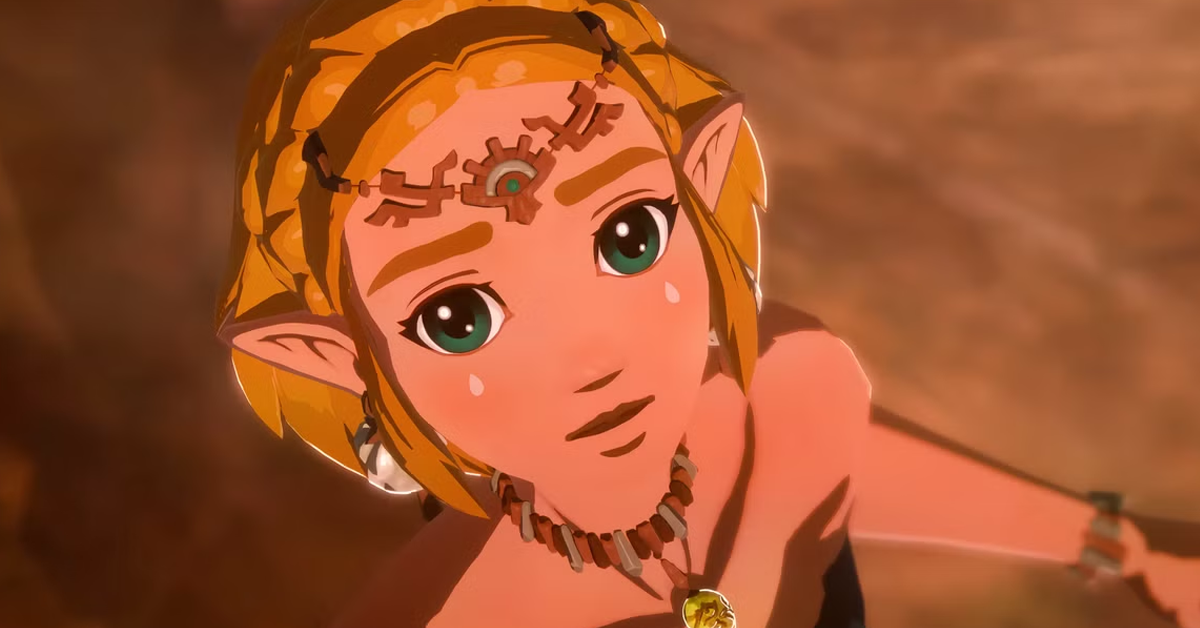
I’ll be honest — when Hyrule Warriors: Age of Imprisonment was first announced, I didn’t care. At all. I saw the trailer, the endless explosions, the screen filled with enemies flying everywhere, and I thought, “Oh great… another one of these.” I wasn’t impressed. The first Hyrule Warriors didn’t really do much for me, and I’ve never been a big fan of that musou style of gameplay — the kind where you’re taking out hundreds of enemies in giant flashy combos that all start to blur together after a while. It’s fun for a few minutes, sure, but it always felt shallow to me. Like eating a big bag of sweets — exciting at first, but after a while, you just feel kind of numb.
And I think that’s why I was so ready to dismiss this game. It looked like more of the same, just shinier. The trailer promised “massive battles,” “epic storylines,” “familiar heroes” — all the usual buzzwords that sound great on paper, but rarely deliver. And maybe part of me was being a bit of a snob. Zelda is one of my favorite series ever, and I’ve always seen the mainline games as these carefully crafted experiences full of mystery and atmosphere. Hyrule Warriors, on the other hand, always felt like the opposite — loud, chaotic, and kind of empty.
When Age of Imprisonment was announced, I wasn’t on board. I figured it’d be another mindless spin-off that people play for a weekend and forget about a month later. I didn’t even plan to buy it at first — it just wasn’t on my radar. But then the reviews started coming in. Some people were surprisingly positive, talking about the story, the characters, even the emotional weight of it all. And that caught my attention. Because if there’s one thing I love about Zelda, it’s when it manages to make you feel something — that sense of nostalgia, loss, and hope that the series always captures so well.
So I decided to give it a shot. I went in with low expectations — honestly, I was prepared to be bored. But right away, something felt different. The intro had this grand, cinematic energy to it — the kind of thing you’d expect from a full-blown mainline Zelda game. The music hit hard, the characters actually had emotional stakes, and the gameplay… while still chaotic, had a flow that I didn’t expect. There was a rhythm to it, especially once I started figuring out the new Sync Strike system. Suddenly, it wasn’t just button-mashing — there was timing, teamwork, and a sense of impact to every move.
Somewhere in the middle of all that chaos, I started realizing — I was having fun. Like, genuinely. It wasn’t the kind of slow, exploratory Zelda experience I’m used to, but it had its own thing going on — this sense of scale and urgency that worked surprisingly well. And as the story unfolded, I found myself more and more invested. The characters actually had arcs that made sense. The cutscenes weren’t filler; they pushed the story forward in ways that tied into the larger Zelda mythology.
By the time I hit the first major boss fight, I was all in. The scale, the tension, the soundtrack kicking in — it just felt epic. Not perfect, not polished in every way, but powerful in how much it cared about delivering a proper, dramatic Zelda story inside this totally different gameplay framework.
And that’s what really surprised me. I went into Hyrule Warriors: Age of Imprisonment expecting to roll my eyes, and instead, I found myself… kind of impressed. Not because it fixed every issue I had with the genre — it didn’t — but because it managed to make me care. It reminded me that even a game I thought I’d hate can still surprise me when it’s made with genuine passion.
I came out of it with a new kind of respect. Not just for this game, but for the Hyrule Warriors series as a whole — for trying something bold, something messy, but something meaningful. And that’s not what I expected to say going in.
Initial Skepticism
Looking back, I think part of my skepticism came from burnout. We’ve seen so many spin-offs and side projects that use the Zelda name, but don’t really feel like Zelda. And when Age of Imprisonment was first revealed, it just looked like another attempt to squeeze more out of the franchise. The marketing leaned hard into the spectacle — “massive battles,” “hundreds of enemies,” “non-stop action.” But none of that is what draws me to Zelda. What I love about Zelda is the quiet. The sense of adventure, the discovery, the emotion behind small moments — not necessarily the scale or the chaos.
So when I saw yet another trailer full of explosions and endless waves of bokoblins flying through the air, I just thought, yeah, this isn’t for me. I’d already been burned once by Hyrule Warriors: Age of Calamity, which had some great ideas but got buried under repetition and button-mashing. It wasn’t that I hated the concept — it’s that it never felt like it earned the Zelda name beyond the characters and soundtrack. And that’s kind of how I expected Age of Imprisonment to be too.
The early gameplay previews didn’t help either. They showed huge maps, objective markers everywhere, a minimap that looked like an air traffic control screen — all these things that screamed busywork. I figured it’d be another ten-hour grind of the same combos over and over, with maybe a few flashy cutscenes in between. And sure, the trailers hinted at a deeper story, but that’s what they always say, right? Every spin-off promises a “darker, emotional tale” until you actually play it and realize it’s just a string of missions loosely tied together.
And maybe I was just being stubborn. Because deep down, there was a part of me that wanted it to prove me wrong. There’s something about the Zelda universe that always pulls me back — no matter the format. Even if I think I’m done, I end up checking out whatever new experiment they’re trying. But I went into this one expecting it to confirm all my worst assumptions — that it’d be a flashy, hollow experience that doesn’t understand what makes Zelda special.
So when I finally sat down to play Age of Imprisonment, I was ready for it to annoy me. I expected the repetition, the empty dialogue, the overblown story. I even told myself I’d play a few missions just to get a sense of it and then move on. But as it turns out… that was the wrong attitude. Because within the first couple of hours, the game started doing things that made me stop, pay attention, and rethink what I thought I knew about this series — and about this genre.
The Turning Point
It didn’t happen right away. At first, I was playing on autopilot — running from one objective to the next, taking out waves of enemies, half-watching cutscenes while checking my phone. You know that early “prove yourself” phase where you’re waiting for the game to click? Yeah, I didn’t think it would.
But then something weird happened. I started paying attention — not because I had to, but because I wanted to. The missions got more layered, the pacing started to make sense, and suddenly it wasn’t just chaos for chaos’s sake. There was rhythm. There was structure.
The first thing that really caught me off guard was the new Sync Strike system. It sounds simple, but it changes the whole flow of combat. Instead of mindlessly spamming combos, you start timing your attacks with your allies — chaining hits together in a way that actually feels earned. It gives the action this rhythm that’s incredibly satisfying once you get the hang of it. You’re not just mashing buttons anymore; you’re conducting the chaos.
And that’s when I realized this game was doing something smarter than I gave it credit for. It’s still a musou at heart — there’s no denying that — but it’s a version of it that’s learned from its past mistakes. It’s faster, cleaner, and way more responsive. The camera doesn’t fight you as much, the impact feels heavier, and when you land a Sync Strike with perfect timing, it’s honestly kind of thrilling.
But even more than the gameplay, it was the tone that hooked me. I was expecting a goofy side story — something throwaway — but the story in Age of Imprisonment actually has weight. It doesn’t just use Zelda characters as window dressing; it builds on their personalities, their fears, and their relationships. It’s about war, loss, and what it means to fight when you already know how the story ends. And that’s something I didn’t expect from a game like this.
There’s a moment — I won’t spoil it — where the music swells, the battlefield is on fire, and everything just feels big. The kind of cinematic moment you usually only get in the mainline Zelda games. That was when I stopped thinking of Age of Imprisonment as a side project and started seeing it as a genuine entry in the Zelda universe. It’s not trying to be Breath of the Wild or Tears of the Kingdom — it’s carving out its own identity, and doing it with confidence.
By that point, I wasn’t just playing out of obligation anymore. I was into it. I wanted to see where the story was going, I wanted to unlock new abilities, and — maybe most surprisingly — I was having fun with the combat. The repetition that used to annoy me suddenly felt more like a rhythm I could get lost in. There’s something cathartic about it once you stop fighting against it and just lean into the spectacle.
And that was the turning point for me. The moment I realized Age of Imprisonment wasn’t the lazy spin-off I assumed it would be — it was a passionate, ambitious reimagining of Zelda’s world through a completely different lens. It’s not perfect, but it’s bold. And for the first time, I found myself thinking, “Wait… maybe I’ve been too harsh on this series.”
The Story and World
What really sealed the deal for me, though, wasn’t just the gameplay — it was the story. And I can’t believe I’m saying that about a Hyrule Warriors game. Usually, the story in these spin-offs is just an excuse to get all the characters in one place and start swinging swords. But Age of Imprisonment actually tries. It has a story that’s not only coherent, but genuinely emotional — something that feels worthy of the Zelda name.
From the beginning, there’s this sense of scale and tragedy that hangs over everything. You’re not just fighting random mobs — you’re part of a war that feels desperate, where every battle costs something. There’s this constant tension between hope and inevitability, because deep down, you know how this story ends. The “Imprisonment” in the title isn’t just about sealing away evil; it’s about the characters themselves being trapped — by destiny, by duty, by time.
The writing surprised me too. It’s not Shakespeare, but it’s thoughtful in the way it uses familiar characters. Zelda isn’t just a symbol of hope — she’s a leader who’s scared, trying to keep it together under impossible pressure. Link isn’t just the silent hero anymore — he’s this force that everyone relies on, and you start to feel the weight of that through how others talk about him. Even the supporting cast gets moments to shine. There’s a sense of camaraderie between characters that makes the world feel alive — like these people actually know each other and care about one another.
And then there’s the presentation. The cutscenes are genuinely impressive — full of energy and emotion — but it’s the tone that got me. The world feels ancient and heavy, like it’s already lived through too many wars. The music absolutely nails that mood too. It’s got this orchestral power behind it, but with a mournful edge that constantly reminds you this isn’t a triumphant adventure — it’s a fight to survive against fate itself.
There are moments where the game slows down — quiet camps between battles, scenes of reflection — and they hit harder than I expected. Those little moments give the chaos meaning. They make the story feel less like an excuse for action and more like a proper narrative about endurance and sacrifice.
And honestly, that’s when I realized how much care went into this. You can feel the developers’ respect for the Zelda universe in the way everything connects — the lore, the atmosphere, even the dialogue. It doesn’t feel like a cash-in anymore; it feels like a love letter. A loud, messy, over-the-top love letter, sure — but a sincere one.
By the time I reached the midpoint of the story, I wasn’t thinking about the repetition or the grind anymore. I was thinking about the characters — about how they were going to get through this, and what they were fighting for. That’s something I never thought I’d say about a Warriors game, and it completely changed how I see this series.
The Gameplay Loop
Let’s talk about the gameplay — because this is where Age of Imprisonment really surprised me the most. And I’ll be upfront: yes, it’s still repetitive. There’s no getting around that. You’re still cutting through massive crowds of enemies, capturing bases, and repeating similar objectives over and over again. On paper, it shouldn’t be that exciting — and honestly, for the first few missions, it isn’t. But once you get deeper in, the loop starts to work in a way that’s weirdly satisfying.
The game doesn’t throw everything at you right away. You start small — just a few characters, simple missions, and basic combos — but as the story progresses, your roster begins to grow. That’s when things really start to open up. Every new recruit brings something fresh to the table: different weapons, different pacing, even a different feel. Playing as Link feels clean and balanced — he’s the baseline. Switch over to Zelda and suddenly you’re managing magical timing and crowd control. Then you get someone like Daruk, who moves slower but hits like a tank, or Revali, who turns the battlefield into an aerial playground. Each one changes how you think about combat.
And it’s not just for show. You’re encouraged to swap characters mid-battle, assigning them commands or jumping between them on the fly. That back-and-forth gives the game this real-time strategy layer that keeps things from getting stale. You’re not just reacting — you’re orchestrating the fight, setting up plays across the entire map.
That’s where the Sync Strike system comes in — and honestly, it’s a game-changer. It lets two characters team up for a devastating combo attack when you time it just right. It sounds simple, but it transforms how you approach battles. Instead of just hammering through enemies, you start thinking in terms of synergy — lining up attacks so your characters hit together, chaining one move into another like a rhythm game. When it works, it’s insanely satisfying. The screen explodes with energy, the camera swings around, and for a moment, you feel like you’re controlling an army that actually knows what it’s doing.
That mechanic alone added a lot more depth than I expected. It’s the first time I’ve felt like a Warriors game actually wanted me to pay attention to timing and coordination, not just button speed. And because every character has their own way of syncing up, you start to develop favorite pairs — those little combinations that just click. It’s addictive, in the best way.
All of this builds into a gameplay loop that’s still inherently repetitive — but in the same way a good song is repetitive. There’s a rhythm to it. Once you find the groove, you stop thinking about the grind and start enjoying the flow — pushing objectives, swapping between heroes, unleashing Sync Strikes, and watching the chaos unfold like a choreographed storm.
By the time your full roster’s unlocked, it’s not about surviving the repetition anymore — it’s about mastering it. The combat becomes this playground of experimentation where every mission feels a little different depending on who you bring and how you play. That’s what kept me coming back. It’s not perfect, but it’s polished enough to make every swing, every combo, and every Sync Strike feel rewarding.
Boss Fights and Set Pieces
If there’s one thing Hyrule Warriors: Age of Imprisonment absolutely nails, it’s the scale of its big moments. Say what you want about repetition — this game knows how to make a fight feel epic. The boss battles and large-scale set pieces are where all the chaos, all the noise, finally comes together in a way that feels earned.
The first time you go up against one of the major bosses — I mean a proper, screen-filling monster — it hits differently. The camera swings wide, the music swells, and suddenly, you’re not just hacking away at mobs anymore; you’re in a cinematic showdown that feels like something straight out of a Zelda finale. And these aren’t quick fights either — they’re full-on events. You’re dodging massive swings, coordinating between multiple characters, timing your Sync Strikes perfectly to chip away at weak points. When you finally pull off that team finisher and watch both characters land a synchronized blow, it’s so satisfying. It’s like the game saying, “See? This is why we made it this big.”
That sense of coordination — of teamwork — really shines in these moments. It’s not just about button-mashing anymore; it’s about understanding how your team fits together. Maybe you send one character to distract the boss while you charge up a Sync Strike from across the map. Maybe you swap mid-fight to chain a combo that opens up a weak point. It’s the kind of fight where everything you’ve learned up to that point — every upgrade, every mechanic — suddenly matters.
And then there are the set pieces. You’ll be storming massive fortresses, defending collapsing strongholds, or taking part in battles that span the entire map. The game loves to throw you into chaos, but it’s intentional chaos. It feels like you’re part of something bigger — not just a single hero, but one soldier in a desperate, world-shaking war. There’s this energy to it that’s hard to describe — part adrenaline, part awe. You can tell the developers wanted these moments to feel overwhelming in the best way possible.
It helps that the presentation during these fights is incredible. The soundtrack goes full orchestral — drums pounding, strings swelling — and every explosion, every Sync Strike, lands with that perfect cinematic punch. There were moments where I actually caught myself grinning, thinking, “Okay, this is ridiculous… but I love it.” It captures the kind of wild, over-the-top excitement that Zelda usually saves for its finales — except here, it’s happening constantly.
But what makes it work is that it’s not empty spectacle. The story context gives these battles weight. You’re not just fighting because the game told you to — you’re fighting to protect characters you’ve grown attached to, in a world that actually feels like it’s falling apart. That emotional grounding makes the action hit harder.
By this point, the game had completely won me over. The boss fights weren’t just fun — they were cathartic. Every victory felt like you’d survived something massive, and every defeat pushed you to rethink your approach. It’s chaotic, it’s over-the-top, but it’s also kind of beautiful in its intensity.
How It Complements Tears of the Kingdom
One of the things that really surprised me while playing Hyrule Warriors: Age of Imprisonment is how naturally it fits alongside Tears of the Kingdom — not just as a spin-off, but as a genuine prequel to the world we explore later. It’s set long before Link’s modern-day journey, back when Hyrule was still a land of war, prophecy, and struggle — and that perspective completely changes how you see everything that comes after.
In Tears of the Kingdom, Hyrule is in the process of healing — you’re rebuilding, rediscovering, creating. But Age of Imprisonment shows you what came before that: the fall, the desperation, the generations of heroes and leaders who fought and sacrificed so that world could even exist. It’s the story of how that endless cycle of rebuilding begins. Seeing that contrast — the peace of Tears of the Kingdom versus the chaos of Age of Imprisonment — makes both games hit harder.
You start to realize that every ruin you stumble across in Tears of the Kingdom isn’t just scenery — it’s a scar. A remnant of this exact war. When you’ve fought through those massive battles, seen the losses, and watched Zelda and her allies push themselves to the edge, the quiet moments in Tears of the Kingdom feel heavier. That open world starts to feel haunted in a good way — alive with the ghosts of everything that came before.
What I really love is how the characters connect between the two. Zelda in Age of Imprisonment isn’t the calm, regal figure we know from Tears of the Kingdom; she’s young, uncertain, and still learning how to lead. Watching her struggle here makes her transformation later feel earned — it’s not just destiny, it’s growth. You see her step into her role as the heart of Hyrule, not because fate demanded it, but because she chooses to, despite the weight of everything against her.
And that’s what makes this such an interesting companion piece. Tears of the Kingdom celebrates creativity and rebirth — it’s about what comes after the storm. Age of Imprisonment is about survival during it. It’s messy, desperate, emotional — but it gives context to the hope that defines Zelda’s later story. You can’t fully appreciate what Hyrule becomes without understanding what it went through.
So even though this isn’t a mainline Zelda game, it plays a really important role in expanding that universe. It’s the other side of the myth — the part that history tends to gloss over. And when you look at it that way, Age of Imprisonment doesn’t just complement Tears of the Kingdom — it deepens it. It gives that world a memory.
Reasons why Zelda fans should check this out
It Expands Zelda’s Lore in a Way No Other Game Does
Age of Imprisonment isn’t just a side story — it’s a genuine prequel that explores the wars and sacrifices that shaped Hyrule long before Tears of the Kingdom. You see the world before it became ruins, before the legends were written. It adds emotional weight to the lore, showing how the myths and prophecies we take for granted were actually lived and fought for by real people.
It Gives Zelda Herself a Deeper, More Human Arc
This version of Zelda isn’t the serene, all-knowing figure we usually see. She’s vulnerable, unsure, and under enormous pressure to lead a kingdom that’s falling apart. Watching her grow from fear to leadership gives you a completely new appreciation for who she becomes later in the series. It’s one of the best characterizations of Zelda in years — emotional, flawed, and incredibly relatable.
The Combat Is Simple, But Shockingly Satisfying
If you’ve ever bounced off the musou formula before, this game might change your mind. The Sync Strike system makes every battle feel tactical instead of brainless. You can chain devastating team attacks between two characters, giving the chaos a sense of rhythm and purpose. And because every hero plays differently — from Link’s precision to Revali’s aerial style — combat feels surprisingly varied once your roster expands.
The Boss Battles Feel Like Playable Zelda Finales
Few games capture the scale and drama of a Zelda boss fight like this one does — and here, you get dozens of them. Massive creatures, sprawling battlefields, orchestral music blaring in the background — it’s everything you love about Zelda’s big moments, just turned up to eleven. Every major fight feels like the climax of a mainline game.
It Makes Tears of the Kingdom Hit Harder
Because this is a prequel, it adds context and emotional weight to the world you explore later. The ruins, the scars, even the tone of Tears of the Kingdom feel more meaningful when you’ve seen what came before. It’s like reading the missing chapter of a story you already love — and suddenly realizing how much more depth it has.
Final Thoughts
By the time the credits rolled, I kind of had to laugh at myself — because I’d spent months rolling my eyes at this game, only for it to completely win me over. Hyrule Warriors: Age of Imprisonment didn’t just change my mind about this series — it made me realize how much I’d underestimated what these games could be.
It’s not perfect. The repetition is still there, and there are moments where the chaos gets a little too much. Sometimes the screen feels like it’s having a nervous breakdown. But even with all that, I came away from this game with something I didn’t expect: appreciation. There’s a heart to it — a sincerity — that shines through every mission. You can tell the people who made it care about Zelda. They care about the world, the lore, the tone, and they found a way to express that through this wild, over-the-top combat system.
What really sticks with me is how much it made me feel. The story hits heavier than you’d expect from a Warriors game. There are moments of loss, of triumph, of genuine emotion — and it all lands because the game takes its world seriously. It’s not trying to parody Zelda or twist it into something unrecognizable. It’s trying to celebrate it.
And that’s what I ended up respecting most about Age of Imprisonment. It’s not just a spin-off — it’s a different lens on the same world, showing you a side of Hyrule we don’t usually get to see. A side that’s raw, messy, and loud, but still full of heart.
It’s funny — I went in expecting another forgettable button-masher, and instead I got one of the most unexpectedly emotional Zelda experiences I’ve had in years. It’s not for everyone, and that’s okay. But for me, it was a reminder that even the games you think you’ll hate can surprise you if you give them a real chance.
Hyrule Warriors: Age of Imprisonment might not be flawless, but it’s earned my respect. It’s bold, it’s ambitious, and it’s a whole lot better than I ever gave it credit for.
That’s where I ended up with Hyrule Warriors: Age of Imprisonment. A game I was fully prepared to dislike… that somehow turned out to be one of my favorite surprises this year. I still think it’s rough around the edges, and I totally get why some people won’t vibe with it — but if you’ve ever written off the Warriors games like I did, this one might just change your mind.
Anyway, I’d love to know what you thought of it. Did it win you over, or are you still not convinced? Let me know in the comments — I’m genuinely curious how people are feeling about this one. And hey, if you enjoyed this video or if it got you thinking differently about the game, maybe leave a like or subscribe — it really helps out.
Thanks for watching, and I’ll see you in the next one.
Leave a Reply