
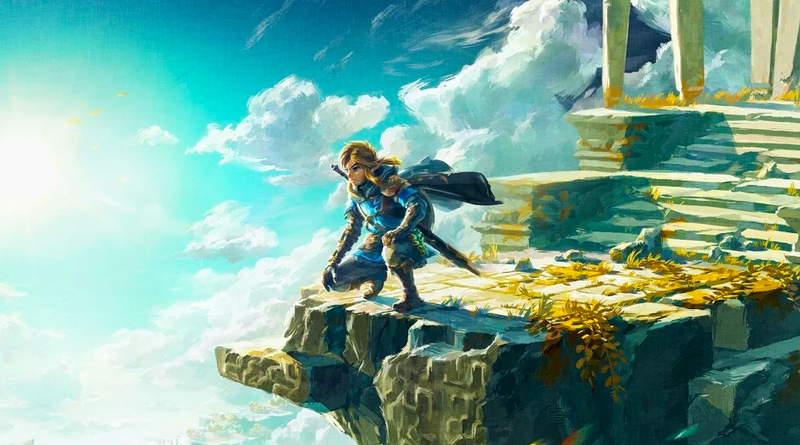
When The Legend of Zelda: Breath of the Wild came out in 2017, it felt like lightning in a bottle. It wasn’t just another great Nintendo game — it was one of those rare moments where everything clicked. The design, the tone, the sense of discovery — it all came together in a way that made it feel new, even though it was built on decades of history. You didn’t just play Breath of the Wild; you lived in it. Every mountain you climbed, every weird little shrine you found — it all felt personal, like you were carving your own story out of this vast, silent world.
It’s hard to describe just how much that game changed expectations — not just for Zelda, but for open-world design in general. After it came out, so many other games tried to chase that same feeling: the freedom, the curiosity, the quiet. But Breath of the Wild didn’t just let you do whatever you wanted — it made everything you did feel meaningful. It had this rare kind of restraint, like the designers trusted you completely. And because of that, it became one of those untouchable games — the kind people call “a masterpiece,” not just because of what it did, but because of how it made them feel.
So when Nintendo announced a direct sequel — Tears of the Kingdom — the reaction was a mix of excitement and disbelief. A sequel? To that? It felt almost like a contradiction. Nintendo almost never makes direct sequels to their biggest games. Each Zelda entry has always been its own reinvention — a new art style, a new tone, a new kind of world. Ocarina of Time led to Majora’s Mask, sure, but even that was an emotional counterpoint, not a continuation. Tears of the Kingdom, though, promised to take us back to the same Hyrule, with the same Link and the same foundations. It was a bold choice — maybe even a risky one.
Because here’s the thing: once you’ve already redefined a genre, where do you go next? If Breath of the Wild was about tearing the formula apart, what’s left to tear down? Making a sequel to a revolution feels like trying to write a second ending to a book that already closed perfectly. For a while, it felt like Tears of the Kingdom couldn’t possibly exist without disappointing someone. Too similar, and people would call it lazy. Too different, and it would lose the magic that made the first game so beloved.
And yet — somehow — it exists. And more than that, it thrives.
When you first step back into Hyrule, there’s this strange sense of déjà vu. You recognize the hills, the forests, the quiet plains where you once fought Guardians or tamed horses. But something’s changed. The light feels different. The music feels older, sadder, wiser. It’s not the same world you remember. It’s a wounded world — a place that’s lived through its own ending and is now learning how to heal. And that’s what makes the return so powerful. The familiarity isn’t lazy; it’s intentional. It’s about what happens after you’ve saved the world — when the story should be over, but life keeps going anyway.
That’s the heart of Tears of the Kingdom. It’s not about rediscovering a world — it’s about rebuilding one. The new mechanics — Ultrahand, Fuse, Recall — aren’t just clever gameplay systems. They’re the entire philosophy of the game in physical form. They let you take the broken pieces of Hyrule — and of your own imagination — and reassemble them into something new. The kingdom is shattered, but instead of giving you a sword and a checklist, the game gives you creativity. It says: here, rebuild it.
And that feels deeply human. Because creation doesn’t always start from nothing — sometimes it starts from loss. Tears of the Kingdom understands that. It’s a game about what you do when the world has already been saved, when the legend is over, and all that’s left is the work of building something better. It’s quieter, more patient, maybe even more mature.
That’s what makes this sequel so fascinating. It’s not trying to outdo Breath of the Wild — it’s trying to talk to it. It’s a conversation between two games, and between two moments in time: one about discovering freedom, the other about what you do with that freedom once you have it. Where Breath celebrated curiosity, Tears celebrates creativity. Where one was about exploration, the other is about invention.
So yes, on paper, it’s a sequel that shouldn’t exist — but in practice, it’s one that had to. Because stories don’t really end, do they? They just change form. And Tears of the Kingdom is proof of that — that even after you’ve changed everything, there’s still beauty in putting the pieces back together.
Expectations vs. Reality
Before Tears of the Kingdom came out, there was this strange mix of hype and hesitation in the air. People were excited, of course — it was a new Zelda game, and not just any Zelda game, but a follow-up to one of the most beloved titles ever made. But underneath that excitement, there was also a quiet fear: what if it’s just more of the same?
Because, really, how do you follow up a game that already redefined everything? Breath of the Wild felt so complete, so perfectly self-contained, that the idea of going back to the same world almost sounded… wrong. Some fans wanted a totally new setting. Others just wanted “more Breath of the Wild” — more shrines, more places to climb, more everything. But no one really knew what a sequel like this could look like. And that uncertainty hung over it right up until release.
When the first trailers dropped, the reaction was cautious. There were floating islands, a darker tone, some mysterious sky mechanics — but for a long time, people couldn’t tell how much had really changed. And honestly, that’s fair. The early footage looked familiar. It was still Hyrule. Still that same quiet music, that same map, those same rolling fields. It didn’t scream new. It whispered different.
And when the game finally came out, the reality was both simpler and more profound than anyone expected. Tears of the Kingdom didn’t reinvent the series — it deepened it. It didn’t throw away what worked before; it built upon it, layer by layer, like sediment in a living world. The surface of Hyrule was familiar, but now it had depth — literally. The Depths stretched beneath the world like a shadow, and the sky above felt endless. Suddenly, you weren’t exploring one map anymore — you were exploring three versions of the same world, stacked on top of each other like a living ecosystem.
But what really surprised people wasn’t the scale — it was the creativity. The game wasn’t trying to impress you with spectacle; it was trying to hand you a toolbox and say, “Here, go build something weird.” That was the real twist. Everyone expected a bigger Breath of the Wild — what they got instead was something more personal, more playful. The magic of Tears of the Kingdom wasn’t in discovering what Nintendo had made — it was in discovering what you could make inside it.
And that’s where expectations quietly flipped. All the fears about repetition faded the first time you used Ultrahand to build a bridge out of scrap wood, or crafted some chaotic flying machine that barely worked but somehow got you across a canyon. Those moments reminded people why they loved Breath of the Wild in the first place — not because of what it gave them, but because of what it let them do.
That’s the thing about Tears of the Kingdom. It’s not a sequel that tries to surprise you — it’s one that trusts you. It trusts that you’ve already lived in this world once, that you’ve learned its language, and now you’re ready to speak it fluently. It doesn’t try to reinvent the wheel — it hands you the parts and says, “Build your own.”
And in the end, that’s what made it so special. The reality wasn’t that Tears of the Kingdom failed to outdo Breath of the Wild — it never tried to. It wasn’t about going bigger or bolder. It was about going deeper. About showing that even when you return to familiar ground, there’s still endless room for discovery — not because the world has changed, but because you have.
A Changed Hyrule: Familiarity as Design
The first time you step back into Hyrule in Tears of the Kingdom, it’s like waking up from a dream you half remember. Everything looks familiar — the same roads, the same valleys, the same soft light spilling over the hills. But something’s different. The silence feels heavier now. The air carries the weight of memory. You know this place, but it doesn’t feel like home anymore.
And that’s deliberate. Nintendo didn’t rebuild Hyrule to give players something new — they brought us back to show us what time does to a world. What it does to us. When you first played Breath of the Wild, Hyrule was a mystery. Every mountain you climbed was an adventure. Every strange rock formation felt like a secret. But in Tears of the Kingdom, the mystery isn’t gone — it’s just changed. The adventure isn’t in discovering a world for the first time, but in revisiting it, with all the ghosts of what came before still echoing in your memory.
It’s a rare thing for a game to trust its players with that kind of emotional continuity. Most sequels want to dazzle you — new lands, new gimmicks, new spectacle. But Tears of the Kingdom understands that sometimes, the most powerful thing you can feel isn’t surprise — it’s recognition. That strange mix of nostalgia and unease when you see something you used to know, changed by time. That’s the feeling of returning to the Temple of Time, only to find it broken again. Or climbing the same hill you once used as a lookout, now swallowed by gloom. It’s not just the land that’s evolved — it’s you, the player.
Hyrule has always been a reflection of its people — its history, its decay, its hope. In this version, it’s scarred but alive, like a kingdom that refuses to die. The upheaval — literally, the cataclysm that tore it apart — turns the world into layers of meaning. The Sky Islands hang above like remnants of a forgotten age, while the Depths spread below like the kingdom’s collective subconscious. Heaven, earth, and underworld — all connected. It’s not subtle, but it doesn’t need to be. It’s myth told through geography.
And somewhere in the middle of it all is Link — the same silent figure, once again piecing together a broken world. But this time, it feels more personal. In Breath of the Wild, you were a wanderer trying to remember who you were. In Tears of the Kingdom, you know who you are — you’re trying to remember what you’ve lost. Every place you visit carries a memory, every ruin a faint echo of a story you’ve already lived. It’s melancholy, but it’s also beautiful.
There’s a quiet genius in using familiarity as a design choice. Most games fear repetition — they want to constantly show you something new. But Tears of the Kingdom leans into it. It says: “You’ve seen this before, but look again.” And in doing so, it turns familiarity into reflection. You start noticing small details — the way villages have rebuilt themselves, how characters talk about the past, how nature has slowly reclaimed what once was destroyed. Hyrule feels alive in a way few sequels ever achieve, because it feels remembered.
And that’s really what makes this world special. It’s not about shock or novelty — it’s about growth. You’re not exploring a new map; you’re revisiting an old friend. One who’s been through a lot since you last saw them. And as you wander through those familiar fields again, you realize that the game isn’t just asking you to explore — it’s asking you to reflect. On the world, on its history, and maybe even on yourself.
Creation as the Core Mechanic
If Breath of the Wild was a game about discovery, Tears of the Kingdom is a game about creation. Everything in it — every system, every tool — revolves around the idea that the world is broken, but you can fix it. Not perfectly, not permanently, but your way. It’s a game that hands you a pile of junk, a few scraps of wood and wheels and fans, and says: “You’ll figure it out.” And somehow, you always do.
Ultrahand is the heart of that philosophy. At first, it just seems like a clever new mechanic — a fun, overpowered version of telekinesis that lets you stick things together. But the more you use it, the more it starts to feel like something deeper. Ultrahand isn’t just about problem-solving — it’s about ownership. Every bridge, every machine, every weird flying contraption you cobble together feels yours. It’s messy and unstable and often hilarious, but that’s the point. It’s creation without perfection — invention born from imperfection.
And then there’s Fuse — another mechanic that at first feels small, but grows in meaning the longer you play. Fuse takes the familiar and makes it strange again. It lets you take what’s broken — a stick, a rock, a fallen enemy’s horn — and combine it into something stronger. The weapons still break, of course. Everything in this game still ends. But that’s what makes every creation feel alive. It’s not about permanence; it’s about adaptation. Fuse turns fragility into opportunity — it rewards you for thinking, not hoarding.
Even Recall — a tool that literally rewinds time — fits into this theme of rebuilding. On paper, it’s about puzzles and movement. In practice, it’s about giving you the power to undo mistakes, to turn chaos into control. It’s one of those mechanics that feels small until you realize what it’s saying: that time, memory, and creation are all connected. You can’t rebuild without understanding what came before.
Together, these tools transform Tears of the Kingdom into something rare — a game that blurs the line between player and designer. It’s not about following instructions; it’s about experimenting, failing, laughing, and trying again. Some of the most memorable moments in the game aren’t the ones Nintendo crafted, but the ones you did — when your half-broken flying machine somehow made it across a canyon, or your ridiculous homemade tank actually worked for once. It’s chaotic, yes, but it’s also freeing in a way few games dare to be.
There’s a quiet confidence in that design. Nintendo could’ve filled the world with more dungeons, more scripted moments, more traditional challenges. Instead, they trusted players to create their own meaning — to become co-authors of the world. And that’s where the magic of Tears of the Kingdom really lies. It’s not trying to impress you with what it can do — it’s inviting you to discover what you can do.
And in that sense, the game becomes almost spiritual. It’s a story about restoration, yes — but also about imagination. About how, even after the world falls apart, there’s still joy in putting it back together. About how, sometimes, the act of building something — even something silly or temporary — can feel like hope.
Because in Tears of the Kingdom, every invention is a small defiance against despair. Every bridge you build, every contraption that somehow doesn’t explode, every experiment that barely works — they all say the same thing: This world is worth saving. And you can help save it.
The Story of Restoration
For all its mechanical freedom and creative chaos, Tears of the Kingdom is, at its core, a story about healing. Not just a kingdom, but people — and ideas — that have been broken and remade. Beneath all the sky islands and Zonai machinery, there’s something tender running through it: a quiet belief that restoration matters. That even after the end of the world, rebuilding is worth it.
Where Breath of the Wild began in the aftermath of a tragedy, Tears of the Kingdom begins in the middle of a wound. The game opens beneath Hyrule Castle, deep underground — a literal descent into history. Link and Zelda find what’s left of a forgotten age, and in awakening that history, they also awaken something darker: Ganondorf, the source of corruption itself. But unlike previous Zelda stories, this isn’t a clean good-versus-evil narrative. It’s about persistence. About how decay and creation exist side by side, and how every act of rebuilding carries the shadow of what came before.
Zelda’s story embodies that perfectly. Her transformation — from scholar to dragon, from ruler to eternal protector — is both beautiful and devastating. She doesn’t defeat evil by destroying it; she overcomes it by enduring. Her sacrifice isn’t about glory or power, but faith — faith that the world will keep moving forward even if she can’t. In that sense, she becomes the spirit of Hyrule itself: a symbol of what it means to love something enough to let it go.
And then there’s Link — a character who barely speaks, yet says so much through action. In Breath of the Wild, his silence reflected loss; he was a hero trying to remember who he was. In Tears of the Kingdom, that silence feels different. It’s not the quiet of forgetting — it’s the quiet of understanding. He’s been through this before. He’s seen the world fall and rise again. His journey this time isn’t about rediscovering courage — it’s about applying it. About doing the hard, unglamorous work of putting things back together.
Ganondorf, too, feels different here. He’s not just evil for evil’s sake. He’s the embodiment of what happens when creation curdles into obsession — when power refuses to let go. If Zelda represents selfless endurance, Ganondorf is the refusal to change, the hunger to control. His decay isn’t just physical; it’s moral. By the time you face him, you realize he’s not just an enemy to defeat — he’s what happens when the world stops evolving.
What makes all of this work so powerfully is the tone of the world around it. Tears of the Kingdom doesn’t tell its story through cutscenes alone — it tells it through the environment. You see it in how villages have been rebuilt, in how people talk about the past, in the little communities that have started to thrive again. Every character, from the engineers of the Zonai devices to the farmers patching up their land, reflects the same theme: that rebuilding is an act of hope.
And maybe that’s why this story hits so deeply. It’s not about destiny anymore. It’s about maintenance. About the ongoing, often invisible work of keeping things alive. The temples aren’t monuments to power — they’re reminders of balance. The Tears of the Kingdom themselves aren’t trophies — they’re memories, fragments of lives that shaped the present. Every step Link takes is one more act of care in a world still learning how to stand again.
By the end, when Zelda finally returns, not as a goddess or a dragon, but as herself, the message becomes clear: this isn’t a story about saving the world. It’s a story about restoring it — piece by piece, person by person, moment by moment.
And that’s what gives Tears of the Kingdom its quiet power. It doesn’t end with triumph — it ends with healing. Not the fireworks of a grand finale, but the soft, steady light of a sunrise over a kingdom rebuilt.
The Legacy — Beyond the Wild
By the time the credits roll on Tears of the Kingdom, it’s hard not to feel a strange kind of peace — the kind that comes not from finishing something, but from understanding it. It’s a feeling few games ever reach. Because Tears of the Kingdom isn’t just the sequel to Breath of the Wild — it’s a mirror held up to it. It takes everything that made the first game magical and asks: what does that magic mean now?
Most sequels chase escalation. Bigger maps. More powers. Louder stories. But Tears of the Kingdom takes the opposite approach. It’s not about being larger — it’s about being truer. It deepens instead of expands. It trusts the player to bring their own history with them, to remember what it felt like the first time they stepped into this world. And in doing that, it creates something incredibly rare in gaming: a sense of continuity that feels emotional, not mechanical.
Nintendo could have easily started fresh — a new land, a new villain, a new tone. That’s what they’ve done for decades. But instead, they chose to stay. To look at what they’d already made and ask, what more can we say here? That choice — to iterate rather than reinvent — is one of the most daring artistic moves the company has ever made. Because iteration isn’t safe; it’s vulnerable. It means you’re not hiding behind novelty. You’re facing your own work head-on, asking if it still matters.
And it does. In fact, Tears of the Kingdom proves something profound: that sequels don’t have to overwrite what came before — they can enrich it. Playing it makes Breath of the Wild feel different in retrospect. You start to see its world not as a perfect end, but as the foundation for something more mature. Where Breath was about freedom, Tears is about responsibility. Where Breath celebrated wandering, Tears celebrates building. Together, they form a complete story — one about growth, both in the game and in us.
It’s easy to compare Tears of the Kingdom to Majora’s Mask — another Zelda sequel built from the bones of its predecessor. Both games share that same introspective energy: worlds that feel familiar but slightly off, filled with melancholy and strange beauty. But if Majora’s Mask was about grief and the fear of endings, Tears of the Kingdom is about what happens after. It’s the story of life continuing — messy, imperfect, creative. It’s not about escaping disaster, but rebuilding in its wake.
And that might be Tears of the Kingdom’s greatest legacy — not its scale, not its mechanics, but its philosophy. It’s a game that believes in renewal. In the idea that you can return to something old and still find something new. That progress isn’t always about starting over — sometimes it’s about coming back wiser.
For Nintendo, it’s a reminder that mastery doesn’t mean doing something different every time — it means knowing when to repeat yourself, and why. For players, it’s a lesson in creative resilience — in the joy of building, failing, and building again. And for the Zelda series, it’s a turning point. Because after Tears of the Kingdom, the question isn’t “what comes next?” It’s “what should come next?”
And maybe that’s the point. Tears of the Kingdom closes one of the most important chapters in gaming, not with a sense of finality, but with quiet gratitude. It leaves us looking back — not at what we’ve conquered, but at what we’ve created.
The Art of Rebuilding
In the end, Tears of the Kingdom isn’t really about saving the world. It’s about rebuilding it — and what that says about us.
When you glide across the skies above Hyrule, looking down at a land you’ve already explored, there’s this strange, powerful feeling that creeps in. You’re not discovering anymore — you’re returning. You’re seeing how everything has changed since you were last here, and how, somehow, it still feels like home. That’s the quiet magic of Tears of the Kingdom. It’s not trying to outdo Breath of the Wild. It’s trying to understand it — and through that, to understand us too.
Because rebuilding is something deeply human. It’s slow, imperfect work. It’s picking up the pieces, even when you know they’ll never fit together quite the same way again. It’s learning that progress isn’t about erasing the past, but about carrying it with you — reshaping it into something new. That’s what Link does. That’s what Zelda does. That’s what we do, every time we sit down to play again.
The beauty of Tears of the Kingdom is that it doesn’t treat the end of the world as tragedy. It treats it as possibility. The sky islands above, the depths below, the rebuilt towns scattered across the land — they all speak to the same truth: that even after everything falls apart, creation is still possible. Even after loss, there’s still play. And even after a story ends, there’s still meaning to be found in what comes next.
Nintendo could have made a sequel about power — new bosses, bigger challenges, louder victories. Instead, they made one about patience. About care. About building something with your own two hands, knowing it might fall apart tomorrow — and doing it anyway. That’s what makes this game feel so alive. Not its scale, not its technology, but its humility. It understands that the most powerful kind of creation isn’t about making something perfect — it’s about choosing to make something at all.
When you finally set the controller down, after dozens or even hundreds of hours, there’s no grand sense of closure. There’s just peace. The peace of knowing that the world you’ve rebuilt will keep living, in all its fragile beauty. That somewhere out there, in a land of sky and stone, your creations still exist — your bridges, your gliders, your strange half-broken contraptions that somehow worked. Little testaments to the simple, stubborn joy of making.
And that’s what makes Tears of the Kingdom more than a sequel. It’s a reflection — on creation, on memory, on what it means to care about a world enough to rebuild it. It’s proof that you don’t need to reinvent the legend to keep it alive. You just have to return to it with open hands and say: let’s build again.
So maybe this was never “a sequel that couldn’t exist.” Maybe it was the only one that could.
Leave a Reply