
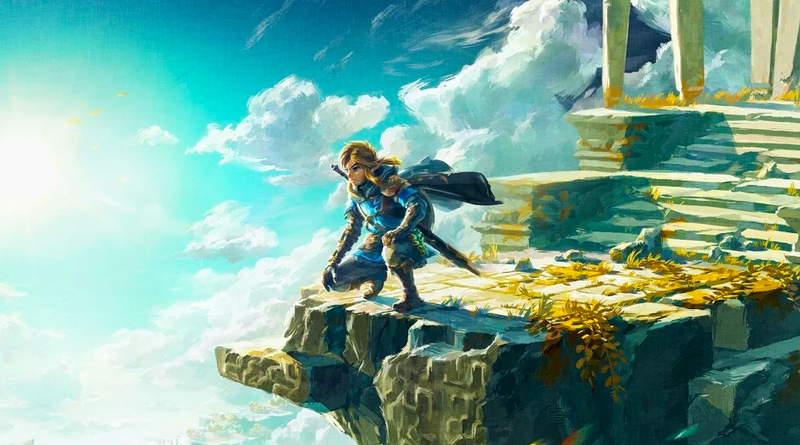
There’s a particular kind of excitement that only comes around once every few years — the sort that builds slowly, quietly, and then erupts into something electric the closer you get to release day. Tears of the Kingdom felt like this. A sequel to Breath of the Wild. A return to Hyrule. A chance to step back into a world that had already carved itself into the collective memory of an entire generation of players.
I remember my own personal launch story. I had 2 weeks off. The first week was in Barcelona, the second week was at home playing Tears of the Kingdom. To this day, I don’t think that holiday has been beaten.
It’s funny, thinking back now, just how certain we all were at the time. We had our expectations carefully arranged like pieces of a puzzle we were sure would fit. Nintendo would reinvent the formula again. The world would be bigger. Tears of the Kingdom would be the definitive moment of the Switch era. How could it not be? Hype isn’t always rational after all.
When the game finally arrived, there was a sense of communal discovery that’s rare. Everyone, everywhere, was doing the same thing: exploring the Sky Islands, discovering the Depths, stepping out into the sunlight, and feeling that familiar pull toward the next horizon. Reviewers called it astonishing. Friends messaged each other about absurd Ultrahand contraptions. Social media overflowed with videos, GIFs, theories, Korok BBQs, and moments of awe.
But the thing about first impressions is that they’re rarely the full story. They’re glimpses, snapshots, promises that sometimes hold and sometimes don’t. When I look back at those early days now, two years later, they feel almost like a dream — bright, exciting, but slightly out of reach. We were reacting to the idea of Tears of the Kingdom as much as the game itself.
That’s the part we didn’t understand at the time: this wasn’t going to be a simple, linear journey. Tears of the Kingdom wasn’t content to be a neat sequel with a neat reception to match. Instead, it took us down a winding path — from celebration to skepticism to something in between. It’s rare for a modern game to live so publicly, to have its reputation shape-shift in real time as millions of players formed and reformed their opinions. Our relationship with it became more complicated, more honest, and ultimately more interesting.
This retrospective is about tracing that emotional arc — the way Tears of the Kingdom launched as a triumph, drifted into backlash, and somehow found its way back into players’ good graces with the Switch 2 Edition. It’s about acknowledging that games don’t stay still after release. They grow, they stumble, they surprise us, and sometimes they wait patiently.
We thought we knew Tears of the Kingdom when it arrived. We thought we had its measure after a hundred hours of play. But only now, with distance and hindsight, can we see the full shape of its journey — and our journey alongside it. This is a look back at the game, and also the shifting landscape of expectations, reactions, and rediscovery that defined its strange, fascinating life.
Launch Euphoria
The launch of Tears of the Kingdom washed over us. It felt like a shared cultural moment, the kind we only get a handful of times in a generation. In the weeks leading up to it, every conversation among fans had that unmistakable hum of anticipation. People were invested, emotionally and personally, as if the release would somehow validate all the hope they’d quietly stored since Breath of the Wild’s final credits rolled.
And when it finally landed, it was as if a dam burst. Midnight launches returned like they never went out of style. Physical copies sold out in shops that hadn’t seen a proper queue in years. Online, the mood was almost festive. Everyone seemed to be playing at once, discovering at once, gasping at once — a collective adventure unfolding across millions of screens.
The critics had already signaled something extraordinary. For a stretch of days, review outlets felt unified in a way they rarely do. Words like “masterpiece,” “astonishing,” and “a triumph of imagination” were stacked on top of each other, each review sounding like a love letter to a game that had somehow exceeded impossible expectations. Even the more reserved critics struggled to hide their awe. There was a sense that Nintendo had done it again — reshaped the landscape, redrawn the possibilities, proven that lightning can strike twice.
But the real electricity came from players. The moment people stepped onto that first sky island, something clicked. That quiet, golden glow. The sharpness of the air. The way the world revealed itself not in a dramatic sweep, but in a patient, confident exhale. It was familiar and new all at once — the kind of opening that invites you in gently, even as you feel the scale hiding beyond the clouds.
Then, almost immediately, Ultrahand became the star of the show. No one knew what to expect from it — not really — and that was the thrill. Within hours, the internet was a museum of physics experiments gone beautifully wrong. Someone built a rotating death machine that could barely steer. Someone else created a hoverbike so efficient it seemed to break the game, until players realized breaking the game was sort of the point. Even the failures had charm. Half the fun was watching creations wobble apart, burst into flames, or simply collapse under their own improbable ambitions.
It wasn’t long before the Ultrahand inventors became minor celebrities within the Zelda community. Brand new communities formed overnight (like Hyrule Engineering), sharing blueprints, testing theories, and cheering each other on. It was creative chaos, the kind that comes from discovering a system that trusts you completely. You could feel Nintendo’s design philosophy everywhere:
“Here are the tools. Surprise us.”
The world itself played into that sense of wonder. Returning to Hyrule was like revisiting your hometown after years away and noticing details you never knew were there. Familiar roads twisted into new shapes. Landmarks hid unexpected layers beneath their surfaces. Caves and wells peppered the world like secret doors, each one nudging you inward, downward, onward. The sky, meanwhile, felt alive, a chain of floating islands that beckoned from above with their quiet challenge: figure me out.
And the shrines — once a known quantity from Breath of the Wild — felt sharper, cheekier, more confident. They asked you to think sideways, to treat physics like a toy, to look past what seemed obvious in favour of what seemed possible. The joy wasn in fumbling your way toward a solution that felt uniquely yours.
What made those early weeks special was the sheer generosity of it all. Every hour you played, the game seemed to reveal another layer. Another mechanic. Another surprise hidden behind a hill, tucked under a bridge, or drifting above you on a lazy cloud. It felt endless, but not overwhelming. Expansive, but not empty. Tears of the Kingdom walked that delicate line where discovery feels constant but never forced — a balancing act very rare.
And for a little while, everything felt limitless. Fans weren’t debating the story, the map, or the comparisons to Breath of the Wild. They were too busy sharing moments of pure joy — the kind of organic, unfiltered happiness that only an open-world game at the height of its newness can offer. Screenshots, clips, tales of accidental genius… it all blended together into a kind of collective celebration.
In that honeymoon phase, Tears of the Kingdom wasn’t scrutinized or analyzed. It wasn’t weighed down by expectations of what it should have been. It simply was a burst of creativity that felt fresh.
The Backlash Era
Every great honeymoon eventually gives way to something quieter, something slower, something a little more honest. With Tears of the Kingdom, that shift didn’t happen overnight. It arrived gradually, like a weather change — subtle at first, then unmistakable. One day the conversation was about hoverbikes and Zonai devices; the next, people were starting to ask quieter, more complicated questions. And in a way, that was inevitable. A game as large and ambitious as this one was always going to reveal some of its seams once players had explored enough of its edges.
The first murmurs were reflective. Players who had powered through dozens of hours began to admit, almost sheepishly, that the sky islands weren’t as dense as they’d hoped. They were beautiful, but also scattered, sparse in a way that felt surprising given much of the build up focused on the sky. What had initially seemed like a vast new frontier now revealed itself as a series of pockets rather than a full kingdom in the clouds.
The same thing happened with the Depths. In the early days, they felt like a place of mystery — eerie, unsettling, and intriguingly hostile. But after enough time spent navigating their dark corridors, some players began to feel a creeping fatigue. The novelty wore thin. The layout patterns became familiar. What had begun as an exciting inversion of Hyrule slowly shifted into something more repetitive for certain players, and their reflections began circulating.
Then there was the story. For some, the narrative hit the right notes: mythic, symbolic, grand in a way that reached back to the earliest threads of the Zelda timeline. But others felt something was missing — a sense of momentum, a deeper involvement of characters they loved, coherence. The memories, the structural similarities, the familiar beats… They caused a fracture in the fanbase because the expectations were enormous. Breath of the Wild had been a quiet, lonely adventure; Tears of the Kingdom was shaped to be more dramatic, more direct, and not everyone aligned with that shift.
But the biggest point of tension was the familiarity of the surface. Returning to Hyrule was supposed to be comforting, and for many, it was. But for others, the déjà vu became sharper the longer they played. They remembered every hill, every valley, every stable. Some hoped for a more radical transformation, a sense that the overworld itself had grown or evolved. And while the differences were meaningful, they weren’t always obvious. The incredible ambition of the systems sometimes overshadowed the way the land itself still felt like the first game.
What made this “backlash era” interesting, though, is that it wasn’t rooted in rage. It wasn’t a meltdown. It wasn’t a rejection. It was when people started reconciling what the game was with what they imagined it would be. It was the collective realization that no game, no matter how enormous or inventive, could perfectly align with the towering expectations placed on a sequel to a modern classic.
This was the point where Tears of the Kingdom stopped being an event and started becoming a game — flawed, ambitious, misunderstood, beloved, argued over. And it’s in that space, between admiration and criticism, that its true identity started to take shape.
Reflection With Distance
There’s a clarity that comes from stepping away from something you once knew intimately. It’s like revisiting a place after a long absence — the roads are the same, the landmarks haven’t moved, but somehow the air feels different. With Tears of the Kingdom, that clarity didn’t arrive right away. It took months. Maybe even a year. Long after the launch celebration faded and the backlash softened into a hum, players slowly found themselves circling back to Hyrule, almost absentmindedly, as if drawn by a memory they hadn’t fully understood the first time around.
What they found wasn’t the explosive thrill of discovery that had defined those first weeks. It was something steadier. Without the pressure of comparison, without the noise of expectation, the game took on a different texture. Systems that once felt overwhelming began to feel playful again. The world, once scrutinized for what it wasn’t, revealed more of what it was: a space shaped by the joy of tinkering, and experimenting.
Ultrahand, for instance, lost some of its chaotic spectacle and became a familiar companion. Creativity found a new rhythm, driven by figuring things out. In a way, Ultrahand revealed its true purpose only after the noise died down.
The world itself benefited from this distance. Freed from the comparisons to Breath of the Wild, the landscape became easier to appreciate on its own terms. The caves felt more like secret pockets of personality. The Depths, approached at a slower pace, regained their tension and atmosphere. Even the familiar surface of Hyrule felt more intentional, its rearranged paths and subtle shifts less like missed opportunities and more like reinterpretations.
Story criticisms softened too, in the way time has a habit of smoothing sharp edges. With enough distance, players began appreciating the narrative for what it tried to do rather than what it didn’t become.
What surprised many, though, was how Tears of the Kingdom revealed its personality after its cultural moment had passed. Once the spotlight dimmed, the game finally had the space to breathe. And in that light, people began to notice the things that had been overshadowed by launch hype.
Time made it easier to see Tears of the Kingdom not as “Breath of the Wild 2,” but as its own game — stranger, messier, sometimes unwieldy, but endlessly generous in what it allowed players to attempt. The comparison that once defined it now felt too small, too limiting. This wasn’t a sequel trying to outdo its predecessor. It was finding its own odd, brilliant path.
Looking back, it becomes clear that the truest version of Tears of the Kingdom is the version players discovered slowly, without urgency — the version shaped by evenings spent wandering, tinkering, returning to old places with a new mindset. That’s the beauty of distance: it teaches you to stop asking what a game should have been and start appreciating what it actually is.
Switch 2 Edition Renaissance
When the Switch 2 Edition of Tears of the Kingdom was announced, most players didn’t expect much more than a technical tidy-up — a smoother framerate here, faster loading there. Nothing dramatic. Nothing that would change the way people felt about the game. But it’s funny how small technical shifts can open emotional doors you didn’t realize were closed. Returning to Tears of the Kingdom on new hardware was a rediscovery, the kind that sneaks up on you without any grand fanfare.
Booting it up for the first time on the Switch 2 the world felt crisper, clearer, a little more confident. The framerate, once a source of frustration in crowded builds or hectic fights, simply stepped out of the way. Movements felt fluid in a way they hadn’t before. Zonai devices behaved with a new steadiness. Even Ultrahand, once notorious for pushing the old hardware to its limits, suddenly felt lighter, smoother, almost effortless.
For many players, that technical polish softened old frustrations. Journeys into the Depths no longer carried the occasional drag of slowdown. The sky islands felt more inviting when traversal wasn’t punctuated by stutters. Climbing, gliding, exploring caves — everything had a new rhythm, one that allowed the quieter parts of the game to shine without interruption.
And something else happened too, something harder to quantify. With two years of distance, players weren’t chasing hype anymore. They weren’t racing through the story, or comparing every hill and valley to Breath of the Wild, or trying to wring every drop of novelty out of Hyrule. They were just… playing.
In that space, the game’s strengths had room to breathe. The building system, once overwhelming to some, now felt like a familiar craft to return to. Even the overworld, which had once been accused of over-familiarity, felt strangely comforting, as if the two-year absence allowed players to see not the similarities but the changes woven through it.
One of the surprises of the Switch 2 Edition was the way it highlighted the coherence of the game’s world. Without technical limitations distracting from the experience, the three layers — sky, surface, and Depths — felt more interconnected. Players who had once dismissed the Depths as repetitive found themselves appreciating the spatial storytelling beneath the gloom. Shrines felt sharper. Small details previously overshadowed by performance issues finally had their moment.
And then, almost unexpectedly, a wave of affection began to rise again. Not the explosive launch-day euphoria — something more grounded. More like a shared nod between returning players.
This was a recognition that Tears of the Kingdom always had something worth appreciating — it just needed time, space, and the right hardware to reveal its full character. The Switch 2 reframed the experience in a way that made those flaws feel less intrusive, less defining, and more like quirks of an ambitious experiment rather than barriers to enjoyment. A game that had once been debated, questioned, or even dismissed by some suddenly felt alive again. Not perfect — it never was — but vibrant, and strangely refreshing two years after release.
Woven into this rediscovery was something transformative: Zelda Notes. What initially seemed like a simple quality-of-life feature became, for many, a doorway into a part of the game they had always admired from afar but never fully entered. For players who marveled at the wild contraptions circulating on social feeds yet never quite saw themselves as “builders,” Zelda Notes became a very useful application. Yes, in an ideal world it should be in-game and not in the Nintendo app, but that will hopefully come in the future Zelda games.
Instead of confronting that intimidating blank Ultrahand canvas — the moment where imagination can freeze rather than flourish — players could easily access player-made blueprints. They could borrow a design, adapt it, remix it, or simply let it spark an idea that wouldn’t have existed otherwise.
The brilliance of Zelda Notes was it invited people into Tears of the Kingdom. Suddenly the pressure to be inventive evaporated. A hesitant player who once skirted around Zonai puzzles could summon a cleverly engineered lift or glider and feel empowered rather than overwhelmed. Someone who used to avoid the Depths because they didn’t trust their makeshift machines could now deploy a refined, community-tested rover and actually enjoy the journey. Even players who had dismissed building as “not for them” found themselves tweaking designs, personalizing them, discovering small creative instincts they didn’t know they had.
And on the smoother, steadier Switch 2 hardware, these creations took on new life. What used to feel like an engineering exam now felt like play — genuine, relaxed, frictionless play. Zelda Notes turned the act of building into something communal, ideas passed quietly between players who might never meet, but who were building with each other.
Zelda Notes made building welcoming, and in doing so, it helped countless players appreciate a corner of Tears of the Kingdom that had always been rich, but hadn’t always been accessible. On the Switch 2, that corner finally had room to bloom.
Where Tears of the Kingdom Really Stands
Two years on, with the dust finally settled and the noise of the launch era long faded, Tears of the Kingdom sits in a strange but fascinating corner of Zelda’s history. It isn’t the universally beloved masterpiece many assumed it would be, but neither is it the divisive oddity its critics once painted it as.
Most Zelda games arrive with a clear lineage. Ocarina was the revolution. Wind Waker was the misunderstood experiment that time redeemed. Twilight Princess was the traditionalist’s refuge. Breath of the Wild reshaped the entire concept of open-world design. Their legacies are easier to summarize, easy to categorize.
Tears of the Kingdom doesn’t fit cleanly into any box. Its ambitions are stranger, its design choices bolder, its identity more tangled. If Breath of the Wild was a clean slate, Tears of the Kingdom was the blueprint scribbled over, circled, erased, reimagined — a game defined by experimentation as much as execution.
Its legacy isn’t tied to a single mechanic, though Ultrahand will surely live on as one of Nintendo’s most creative ideas. Its lasting impact lies instead in its willingness to give players agency — not just in where they went, but in how they expressed themselves through play. It asked players to be builders, inventors, explorers, and, occasionally, absolute menaces to physics (and Koroks). Few games in recent memory have offered such an open invitation to creativity.
What defines Tears of the Kingdom most clearly is how openly it displayed its ambition. It reached beyond what the hardware could comfortably handle, and while it stumbled at times, those stumbles were part of what made its successes so memorable.
Then there’s the discourse — the shifting waves of opinion that surrounded the game like tides. For some titles, backlash leaves scars; for others, it eventually fades into footnote status. Tears of the Kingdom endured something different. The initial criticisms didn’t destroy its reputation. They pushed players to see the game as its own, proudly peculiar entity. The Switch 2 Edition only accelerated that evolution, allowing players to experience the game unburdened by old technical constraints and, in doing so, letting its intended design shine more clearly.
Where does that leave its legacy now? In a nuanced, fascinating place — one that feels honest rather than idealized. Tears of the Kingdom will be remembered as the moment Zelda embraced true systemic creativity. The moment the series became as much about expression as exploration. The moment the world wasn’t merely something to traverse, but something to shape.
Looking back now, it’s almost funny how sure we all were on day one. We treated Tears of the Kingdom like a puzzle with edges already defined, certain that we knew what shape it would take before we ever placed a single piece. But its real form only revealed itself over time.
With distance, the sharpness of the discourse fades. The debates lose their urgency. The comparisons soften into background noise. What remains is the core of the experience — the part that isn’t measured in technical analysis or hype cycles, but in the quiet moments we have with the game. The late-night wander through an unfamiliar cave. The ridiculous contraption that somehow worked. The first successful flight off a sky island.
We met it first with excitement, then with scrutiny, then with a willingness to accept its quirks and appreciate its ambition. By the time the Switch 2 Edition arrived, we weren’t looking for the game to prove itself anymore.
Leave a Reply