
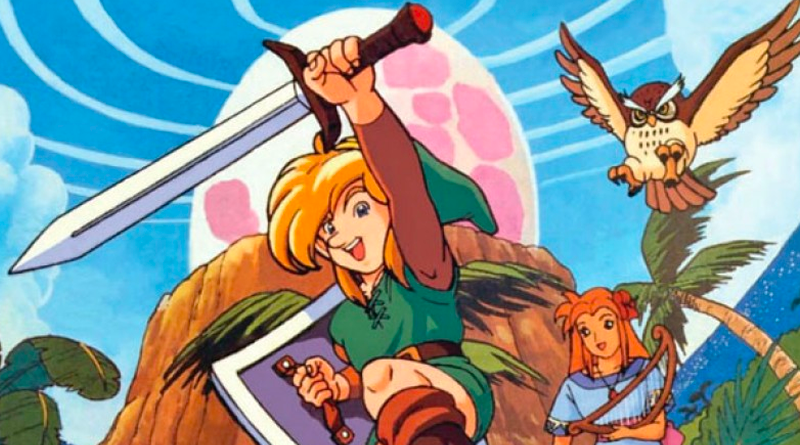
Growing up with The Legend of Zelda is a unique experience. At first, the games appear straightforward: a hero, a princess, and an evil force threatening Hyrule. The Master Sword is drawn, courage triumphs, and the story feels whole. As children or teens, we accept the legend as it is—timeless and simple. But beneath that simplicity lies a deeper puzzle the series never fully solves: mysteries without explanation.
But the longer you live with this series, the more you return to it over the years, the more you begin to notice something else. There are events that shaped entire eras that we never truly witnessed. There are characters whose influence spans generations, yet whose origins are barely explored. Zelda’s world is rich and layered.
A prince’s curse, changing the royal family, and the story moves on. We face Shadow Link, defeat him, and treat it as another challenge, not questioning why the hero confronts himself. This accumulation of mysteries reinforces what Zelda truly is: it’s a mythology. Mythologies are rarely tidy. They’re made from fragments, retellings, old wars, and traditions that last longer than the people who began them. Hyrule feels ancient not because we know everything, but because so much is unknown. There are watchers like the Owl, who seem to understand the cycle better than anyone. Some bloodlines carry divine roles, but we never really learn why they were chosen.
Building on this, deeper questions begin to surface. The Oracles have divine power, but we never learn who gave it to them or why they’re different from the Triforce. The more you think about it, the more Zelda begins to feel like a history carefully preserved but selectively remembered. The victories are celebrated. The legends are retold. But the uncomfortable questions remain in the margins. It’s those margins that make Hyrule feel real — like a world with scars, omissions, and stories too complex to fully explain.
With this in mind, today we’re shifting focus. We’re going to look at mysteries that still linger beneath the surface of The Legend of Zelda. Cursed bloodlines. Reflections that shouldn’t exist. Sacred roles that were never fully defined. These are the parts of Zelda that feel incomplete in the most compelling way.
Next, I’ll share my thoughts on more Unsolved Mysteries in The Legend of Zelda. Before I start, please subscribe to the channel and give this video a thumbs up to help more fans find these discussions. If you want to dive even deeper, consider becoming a channel member by clicking the join button for exclusive content and early access to new videos. Your support helps keep this exploration going.
What Is Dark Link Really?
Dark Link is one of the most unsettling presences in The Legend of Zelda. He doesn’t arrive with a prophecy attached to his name. He gives no speech and declares no intent. He simply appears, as if he has always been there, waiting for the hero to notice.
His first major appearance comes at the end of Zelda II: The Adventure of Link, deep within the Great Palace. By the time Link reaches that final chamber, he has endured one of the harshest journeys in the entire franchise. The path to the Triforce of Courage is not elegant or cinematic. It is exhausting. It feels like a gauntlet designed to wear the hero down. And then, when he finally stands at the threshold of the sacred relic, the final guardian is a dark version of himself.
The Triforce of Courage is guarded by a reflection. Before Link claims courage, he must confront himself—physically, not just metaphorically. There’s no explanation for who placed this guardian or why this trial was chosen. It simply exists in Hyrule: courage demands self-confrontation.
More than a decade later, Dark Link returns in The Legend of Zelda: Ocarina of Time. The setting alone is telling. The Water Temple is already known for its tension and oppressive atmosphere, but the room where Dark Link appears is different. It is vast and open, with only a thin layer of water covering the floor. The sky reflects endlessly beneath your feet. It feels empty. There is no music warning you of what is about to happen. No dramatic camera angle.
Then your reflection moves.
Dark Link rises from the surface of the water as though he were always waiting just beneath it. Every movement you make is reflected back. Every strike is countered. The fight becomes about adapting. You cannot overwhelm him. You have to outthink him. This encounter is powerful because it’s personal to Link. Ganondorf represents external corruption. Ganon is a destructive force. But Dark Link is internal. He suggests your greatest obstacle may not be a monster, but your own doubts and old habits.
In The Legend of Zelda: Four Swords Adventures, Shadow Link appears once more, this time summoned through the Dark Mirror. This detail complicates the psychological element. If Dark Link can be created, summoned, or weaponised through a magical artefact, then perhaps he is not merely symbolic. Perhaps he is something that exists independently of Link’s inner state.
That possibility shifts the question entirely. If Dark Link can be called forth through corrupted objects, what is he made of? Is he pure magic shaped in the hero’s image? Maybe he’s an echo of the Spirit of the Hero, separated and given form. Or is he something older than Link, something that attaches itself to each incarnation?
There is also the recurring theme of ritual. In Zelda II, Dark Link stands between the hero and the Triforce of Courage, as though defeating him is a requirement built into the system. That suggests design. Someone placed that trial there. Someone decided that courage must be tested not against external evil, but against the self. If that is true, then Dark Link is not an accident. He is part of Hyrule’s architecture. A necessary step in the hero’s ascent.
But who would create such a trial? The Golden Goddesses? An ancient royal order seeking to preserve balance? A long-forgotten civilisation that understood something about the cycle that we do not? The series never answers that question. It allows Dark Link to remain suspended between symbolism and lore.
There is another possibility as well, one that feels almost uncomfortable in its simplicity. What if Dark Link is not created at all? If every incarnation of the hero represents light and courage reborn into the world, perhaps shadow must be reborn alongside it. Light casts a shadow by its very nature. Perhaps Dark Link is not a separate being, but proof that the cycle itself is dual. Whenever the Spirit of the Hero rises, so too does its reflection.
Dark Link endures because Nintendo never reduces him to a single explanation. He has no origin cutscene. He isn’t neatly part of the timeline. He remains mysterious.
But the question remains. Who put him there? Why is confronting the self embedded in Hyrule’s sacred systems?
Dark Link is a reminder that in Zelda, the most important battles are not always against the darkness that threatens the kingdom, but against the darkness that stands beside the hero.
Who — or What — Is the Owl Across Eras?
If Dark Link is the hero’s reflection, then the Owl stands for something different: observation. And the more you look at the Owl across Zelda’s history, the more it feels like he is not simply a guide placed there for gameplay convenience, but something woven deliberately into the mythology of Hyrule itself.
In The Legend of Zelda: Link’s Awakening, the Owl shows up often on Koholint Island, giving cryptic advice and guiding Link toward awakening the Wind Fish. He speaks with authority, as if he understands how fragile the world is. As the story goes on, we learn the Owl is revealed to be a servant or projection of the Wind Fish itself. In other words, he acts for the dreamer.
It suggests that the Owl can function as an extension of a higher consciousness. He does not simply exist in the world; he speaks for something greater than himself.
Then, in The Legend of Zelda: Ocarina of Time, the Owl appears again — this time as Kaepora Gaebora. He guides young Link across Hyrule, explains the flow of time, and offers insight at pivotal moments in the journey. Kaepora Gaebora is closely associated with Rauru, the Sage of Light. In fact, it is widely accepted that the Owl is a form Rauru takes to watch over the hero.
If that is true, then once again the Owl is not merely a creature of the forest. He is a projection of a sage—a being directly tied to the Sacred Realm and the divine architecture of Hyrule.
A pattern is emerging.
In Link’s Awakening, the Owl serves the Wind Fish. In Ocarina of Time, he serves Rauru. In both cases, he is not acting independently. He is a messenger. A manifestation of something greater.
Even beyond specific characters, the Owl motif continues to echo through the series. In The Legend of Zelda: Breath of the Wild, owl statues appear throughout the landscape, particularly around shrines and ancient trials. They are silent, but their placement feels intentional. They mark sacred spaces. They overlook ancient systems of testing and divine judgment.
Owls in mythology are often associated with wisdom, but they are also creatures of the night, able to see clearly in the dark. In Zelda, that symbolism fits perfectly. The Owl shows up when the hero is about to face something bigger than himself. He explains the rules but never steps in directly. He guides but never controls.
What makes the Owl across eras compelling is that he seems aware of the cycle.
In Ocarina of Time, Kaepora Gaebora speaks to Link as though he understands the flow of destiny. He appears at moments of transition — when Link leaves Kokiri Forest, when time shifts, when understanding deepens. He never seems surprised. He never expresses doubt. It is as though he is observing a pattern that has played out before.
In Link’s Awakening, the Owl guides Link toward awakening the Wind Fish — fully aware that doing so will cause Koholint Island to vanish. He understands the cost of the journey from the very beginning. He is not shocked by the world’s impermanence. He exists to ensure that the dream ends as it must.
That role is consistent: the Owl appears to maintain balance. To nudge events toward their intended outcome.
Is the Owl simply a sage taking animal form? Or is he a recurring mechanism within Hyrule’s mythology — a divine observer placed within each era to monitor the cycle of courage, wisdom, and power? Could he be an instrument of the Golden Goddesses themselves, ensuring that the hero fulfils his role? Or is he something even more abstract — a manifestation of wisdom that transcends individual characters?
There’s also the question of agency. If the Owl is always linked to a higher power like the Wind Fish, Rauru, or the Sacred Realm, then he is never fully independent. He is a voice, a channel, a representative.
And yet, like Dark Link, he is never fully explained. Nintendo leaves him partly defined—enough to feel intentional, but not enough to feel limited. That uncertainty is what gives the Owl his weight. He feels older than any one game or any single version of Link. He seems like someone or something that has watched this story play out more than once.
The Ancient Prince Who Cursed the Royal Family
One of the most significant stories in the entire Legend of Zelda series does not take place in a dramatic cutscene or a climactic battle. It is tucked away in the backstory of Zelda II: The Adventure of Link, and unless you pause to reflect on it, it can feel like just another piece of fantasy lore. But when you look closer, it reshapes how we understand the royal family of Hyrule.
Long before the events of Zelda II, there was a King of Hyrule who possessed the complete Triforce. As he neared death, he faced a decision about the future of his kingdom. He feared that his son, the Prince of Hyrule, was not yet worthy to wield the entire sacred relic. Rather than pass the full Triforce down intact, he divided it into three pieces. The Triforce of Wisdom and the Triforce of Power remained accessible to the royal line, but the Triforce of Courage was hidden away. Only his daughter, Princess Zelda, was entrusted with its location.
When the King died, the Prince inherited the throne but not the knowledge he believed he deserved. He could not locate the missing piece of the Triforce, and he grew convinced that the kingdom needed the full relic to prosper. From his perspective, this was not necessarily an act of greed. It may have been anxiety. It may have been insecurity. It may have been the fear of ruling without divine completeness. Whatever his motivation, he demanded that his sister reveal the hidden location of the Triforce of Courage.
Princess Zelda refused.
Unable to extract the secret from her through persuasion, the Prince turned to a magician loyal to him. The magician attempted to use magic to force the truth from Zelda’s mind. The spell failed. Princess Zelda was placed into an eternal sleep, and the magician died as a consequence of the magic’s backlash. In that moment, the Prince’s attempt to control divine power resulted in irreversible tragedy.
Overcome with guilt, the Prince ordered that his sister be placed in the North Castle, where she would remain in her sleep. In her honour, he decreed that every royal daughter born into Hyrule’s line would bear the name Zelda.
That decree became tradition.
On the surface, it reads like a gesture of remembrance. A brother trying to honour the sister he failed to protect. But it also embeds something deeper into Hyrule’s monarchy. From that moment forward, every Princess Zelda carries a name born from regret. The identity of the royal family becomes tied not only to divine blessing and sacred duty, but also to a cautionary tale about the dangers of seizing power that was never meant to be taken.
The series rarely revisits the Prince’s reign. We are not told how the kingdom responded to the catastrophe. We do not see the political fallout. We do not know whether faith in the monarchy was shaken or whether the people viewed the event as divine punishment. The emotional and social consequences are left entirely unexplored.
Every time we meet a Princess Zelda in later games, whether in A Link to the Past, Ocarina of Time, or Breath of the Wild, she carries a name rooted in this ancient mistake. The tradition persists long after the details fade from memory. The royal bloodline continues, but the origin of its most defining custom is rarely acknowledged.
There is also a broader thematic weight to this story. The King divided the Triforce because he believed it could not be trusted in the wrong hands. He acted cautiously, separating power to prevent misuse. The Prince, feeling incomplete without it, tried to override that decision, with devastating consequences. In a way, this backstory establishes one of the central tensions of Zelda’s mythology: sacred power must not be forced. It must be earned, respected, or guarded.
The tragedy of the sleeping Princess Zelda becomes a warning embedded in the monarchy. It is a reminder that even those closest to the Triforce can misunderstand it. Even rulers can act out of fear rather than wisdom.
What lingers as a mystery is not the basic outline of events, but everything surrounding it. Who truly was the Prince after this moment? Did he rule differently, humbled by what he had done? Did he spend his life trying to atone? Did the royal family’s relationship with divine power become more cautious in the generations that followed?
The name Zelda is not just symbolic of wisdom or royalty. It is a memorial to a sister who refused to surrender sacred knowledge, and a brother who learned too late that some power cannot be taken by force.
Who Were the Seven Maidens — and Why Their Bloodline?
In The Legend of Zelda: A Link to the Past, the Seven Maidens are central to the story, but they are rarely discussed as a mystery. They function as a quest objective. Link rescues them one by one from crystal prisons in the Dark World, and together they hold the power to break the barrier surrounding Ganon’s Tower. Without them, the final confrontation cannot happen.
The Seven Maidens are said to be descendants of the Seven Sages who sealed Ganon away during the Imprisoning War. Their power is not random. It flows through their blood. They are born into their role.
Princess Zelda herself is one of the Seven Maidens, tying the royal bloodline directly to this ancient sealing tradition. But the other Maidens are scattered across Hyrule, living ordinary lives before being abducted by Agahnim. Within them exists the dormant power to either preserve or dismantle one of the most important seals in Hyrule’s history. The original Seven Sages passed down their sealing power through their bloodlines, ensuring that if the seal ever weakened, the means to restore balance would already exist in the next generation.
But that system is fragile.
In A Link to the Past, Agahnim understands the bloodline better than anyone else. He systematically targets the Maidens precisely because their power is the key to destabilising the seal. By sending them into the Dark World, he manipulates the very mechanism that was meant to protect Hyrule. Their sacred inheritance becomes the pathway for Ganon’s return.
What remains unclear is how conscious this lineage was across generations. Did the Maidens grow up aware of their ancestry? Did their families pass down stories of the Imprisoning War, or had the knowledge faded into myth? The game does not explore this.
There is also the question of why sealing power was embedded into blood in the first place. In Zelda, sacred power is often tied to lineage — the royal family’s connection to Wisdom, the reincarnation of the hero’s spirit. But sealing magic could, in theory, have been bound to sacred artefacts or divine rituals. Instead, it was entrusted to living descendants.
It suggests that the original sages anticipated recurrence. They understood that Ganon might rise again, and that sealing power needed to persist beyond their own lifetimes. Bloodline became insurance against the cycle.
But bloodline also introduces vulnerability. Families can be scattered. Descendants can be lost. Knowledge can fade. In A Link to the Past, the Maidens are not prepared guardians standing watch over Hyrule. They are captured almost immediately, their power activated only because a villain understands its significance.
The Seven Maidens, therefore, represent more than a rescue objective. They are living evidence of the Imprisoning War’s long shadow. Their very existence proves that Hyrule’s ancient conflicts were not resolved cleanly.
And that brings us back to the deeper mystery.
We are told that the Maidens descend from sages. We are told that their blood carries sealing power. But we are never shown the moment that power was bound into lineage. We are never shown how it was decided which families would carry it. We do not know whether other bloodlines once held similar responsibilities and faded from history.
The Seven Maidens show that Hyrule’s mythology isn’t confined to stone temples and sacred relics. It’s also written in people, in families shaped by old wars and carrying sacred roles they might barely understand.
Who Empowered the Oracles — and What Are They Really?
The Oracle games introduce some of the series’ most spiritual concepts, yet they leave one of its most important questions almost entirely untouched.
In the Oracle games, we are introduced to Din and Nayru — the Oracle of Seasons and the Oracle of Ages. Din governs the changing of seasons in Holodrum. Nayru influences the flow of time in Labrynna. Their roles are foundational to the stability of their worlds. And yet, the games never clearly explain what an Oracle actually is.
We are told that Oracles are individuals chosen to embody and protect certain natural forces. They are described as maintaining balance within their respective lands.
If Din governs the seasons and Nayru governs time, then their power is not minor or ceremonial. It is structural. Entire ecosystems and timelines depend on their existence.
The names themselves deepen the mystery. Din, Nayru, and Farore are also the names of the three Golden Goddesses who created the world in Zelda’s cosmology. While the games never state that these women are the goddesses themselves, the naming parallel is unmistakable.
It suggests a connection. But what kind of connection?
The games stop short of declaring the Oracles divine incarnations. They are portrayed as mortal women. Din performs as a travelling dancer before her identity is revealed. Nayru lives quietly in Labrynna as a singer. They are approachable. Vulnerable. They can be kidnapped, possessed, and manipulated.
If the Oracles truly carry divine force, then that force operates through human vessels. It does not descend in overwhelming spectacle. It lives within ordinary people. That pattern echoes throughout the series — divine power embedded into bloodlines, spirits reincarnated across eras — but the Oracles represent something slightly different. Their authority does not appear to be inherited through lineage, at least not explicitly. It appears bestowed.
By whom?
The games do not show a moment of selection. There is no ceremony where the Golden Goddesses appoint their representatives. There is no mention of ancestral succession. We are simply introduced to Din and Nayru as Oracles, and we accept it.
In Zelda, sacred power is often tied to history. The royal family carries Wisdom. The hero carries Courage. The sages pass sealing magic through generations. But the Oracles feel more like appointed guardians.
At the beginning of both Oracle games, the Triforce itself summons Link and sends him to the respective lands. The Triforce recognises imbalance. It initiates intervention. Yet once the crisis begins — once Din is captured and the seasons fall into chaos, once Nayru is possessed and time fractures — the Triforce does not intervene directly again.
Instead, everything hinges on the Oracles.
Twinrova’s plan makes this even clearer. Rather than attempting to seize the Triforce immediately, they target the Oracles. They understand that by manipulating Din and Nayru, they can light the Flames of Destruction, Sorrow, and Despair — the ritual components required to resurrect Ganon. The Oracles are structural pillars of their worlds. If they are destabilised, reality destabilises.
That suggests a broader system at work.
Holodrum and Labrynna are not governed solely by kings or sacred relics. They are sustained by living embodiments of natural and temporal law. The Oracles are part of the mechanism that makes balance possible. And yet, we are never told how that mechanism was established.
Did the Golden Goddesses appoint them directly? Are Oracles unique to these two lands, or are there others in distant regions we never visit? Is the role eternal, passed from one Oracle to the next when their life ends? Or are Din and Nayru singular figures in history?
What makes this mystery compelling is the Oracle’s power exists without a visible structure. We are shown its effects. We see seasons freeze and time unravel. But we are never shown the origin point — the moment when divine force was first entrusted to a human form.
They are living proof that power in Zelda’s world flows through people as much as relics. They embody forces tied to creation itself. But unlike the Triforce, they do not sit in a sacred chamber. They walk among ordinary townsfolk. They laugh. They perform. They are captured. They are both cosmic and fragile. And perhaps that fragility is intentional. Divine balance in Zelda does not operate through invincible beings. It operates through trust — trust placed in mortals to sustain forces far larger than themselves.
We know what the Oracles can do. But we do not know who chose them. That unanswered question leaves their role somewhere between human and divine, making it one of the most interesting mysteries in the whole series.
The Legend Lives in the Gaps
One of the reasons The Legend of Zelda has endured for so long isn’t just because of its heroes or its music. It’s because it leaves space for mystery. Space for interpretation. Space for the world to feel older than the story we’re currently playing.
When you look at these mysteries together—the shadow that tests the hero, the watcher who knows more than he says, the bloodlines shaped by old choices, and the people given sacred power—you start to see a pattern. Zelda isn’t just telling one story. It’s building a mythology, and mythology is never finished.
We’re not meant to have every answer.
The gaps are part of the design. They make Hyrule feel rich and real, shaped by events we’ll never fully see. They remind us that legends are handed down in pieces, not as perfect stories.
Leave a Reply